
R.J. Horner & Co.: Inside the Extraordinary Furniture of America’s Gilded Age
R.J. Horner & Co.: Inside the Extraordinary Furniture of America’s Gilded Age
Written by: Christian Answini | Senior Fine Art Specialist
At the end of the nineteenth century, America’s most fashionable interiors were rarely understated. Dining rooms, libraries, entrance halls, and parlors could be designed as elaborate environments in which architecture, furniture, paintings, textiles, silver, and decorative arts worked together. For families with the means to furnish on a grand scale, furniture was more than functional—it was an expression of taste, craftsmanship, and status.
Few American furniture makers embodied this world as vividly as R.J. Horner & Co.
Established in New York City in 1886, the firm became known for furniture that combined substantial construction with exceptionally elaborate carved decoration. Griffins, lions, classical figures, mythological creatures, foliage, scrollwork, and architectural motifs transformed tables, cabinets, sideboards, and other furnishings into sculptural objects. A selection of R.J. Horner furniture appearing in Alderfer Auction’s September 10 Fine Arts and Mid Century Modern Auction offers an opportunity to look more closely at the company, the remarkable craftsmanship associated with its work, and the richly furnished American interiors for which pieces of this scale were created.
R.J. Horner & Co. and the Rise of the American Luxury Interior
Robert J. Horner established his furniture business in Manhattan in 1886, at a moment when New York was undergoing an extraordinary transformation. Industrial fortunes were creating a new class of wealthy patrons, while architects were designing increasingly ambitious townhouses, country estates, and urban residences. An 1887 record preserved by the New York Public Library identifies R.J. Horner & Co. as “furniture makers and importers” at 61, 63 and 65 West 23rd Street, and period advertising promoted the furnishing of country residences as one of the firm's specialties.
The timing was ideal.
The final decades of the nineteenth century saw American consumers embracing an extraordinary variety of historical styles. Renaissance, Classical, French, English, and other European design traditions could coexist within the same house. A dining room might be treated differently from a library, while a drawing room could evoke an entirely different historical period. Horner supplied furniture suited to this eclectic environment. The company produced pieces in numerous traditional styles while also offering imported furniture. Period advertising indicates a range broad enough to serve customers seeking both comparatively moderate and exceptionally fine furnishings. What has made the Horner name particularly recognizable to collectors, however, is the firm's more exuberant work.
When Furniture Becomes Sculpture
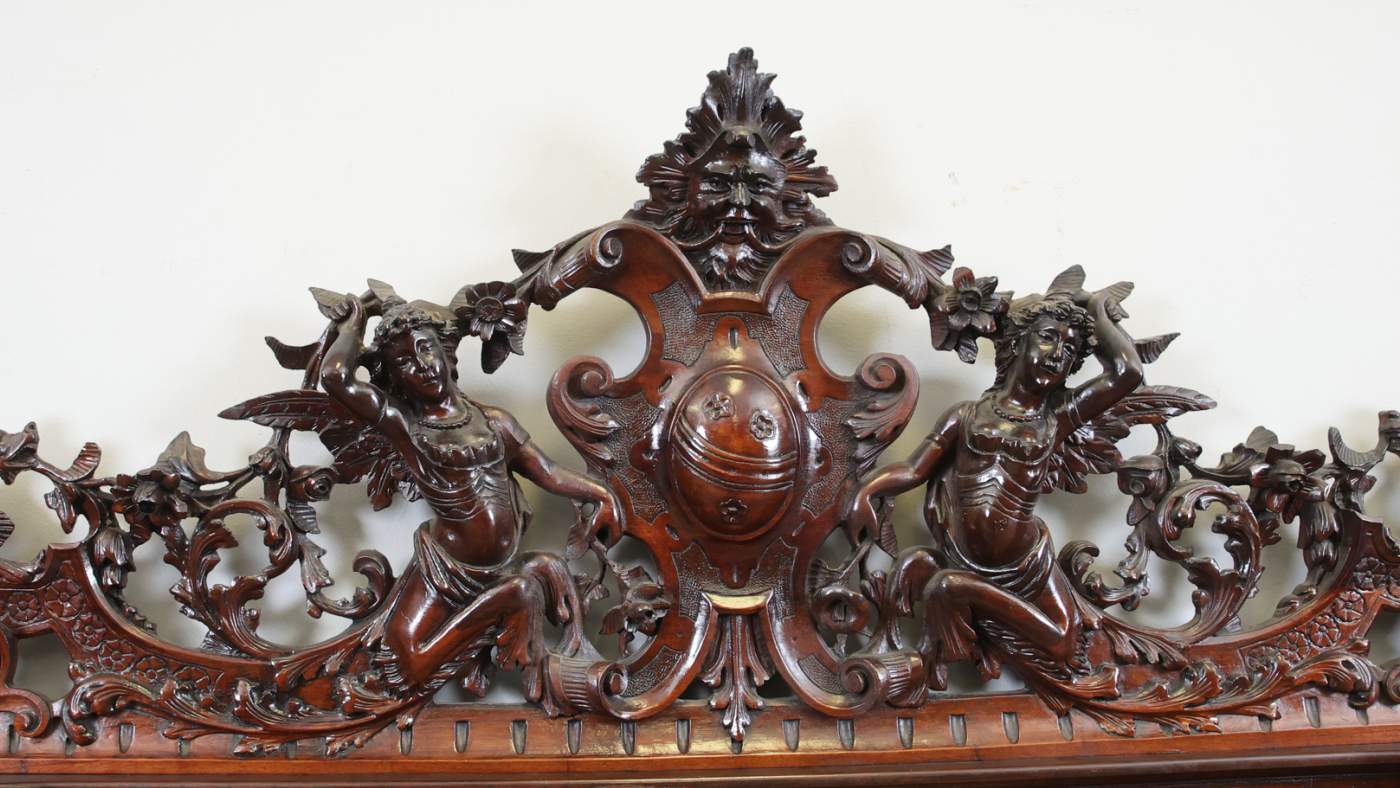
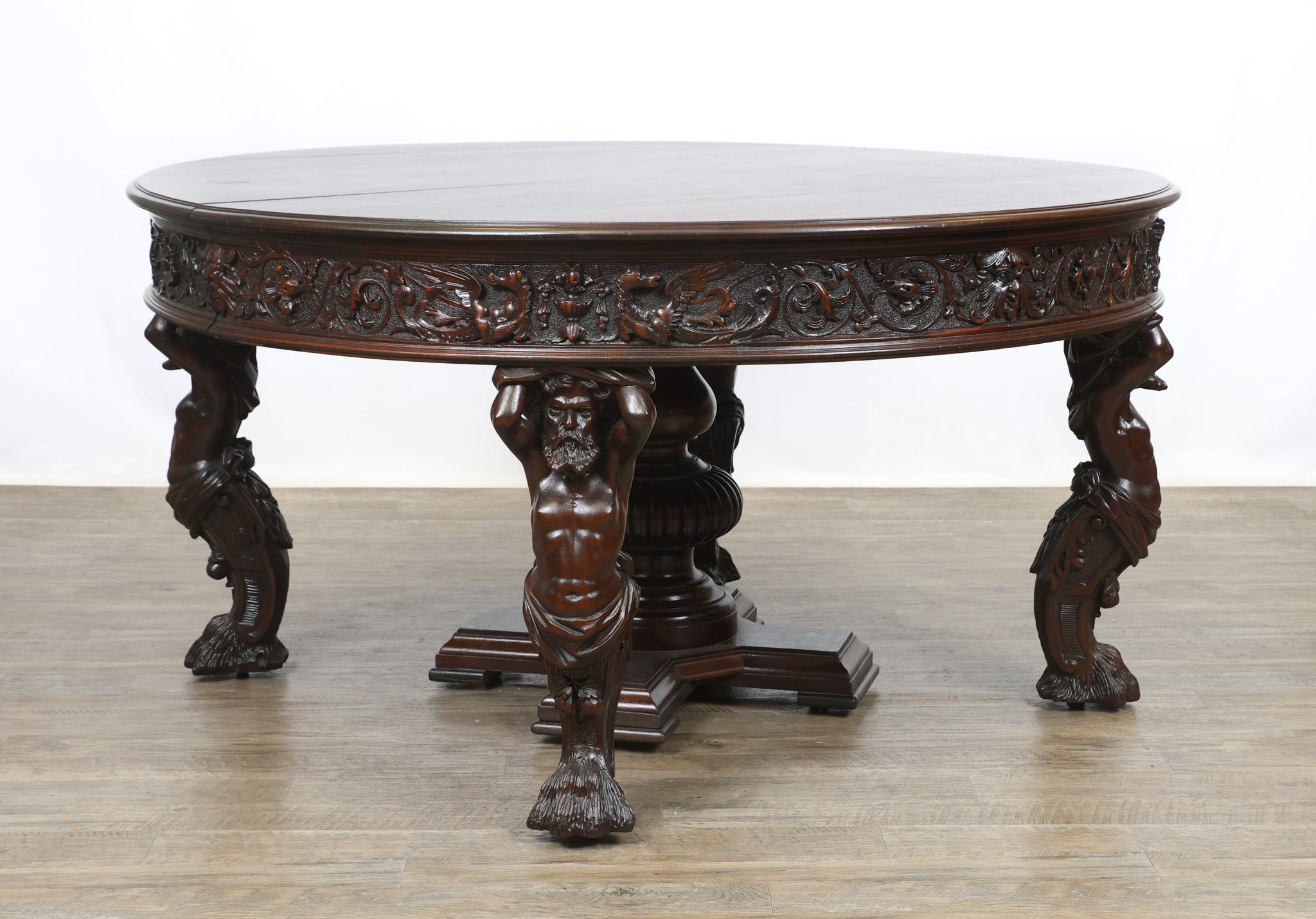
The most elaborate R.J. Horner furniture demands to be viewed from two perspectives at once. First, there is the object itself: a table, cabinet, server, chair, or sideboard designed to perform a practical role within a household. Then there is the carving. Human figures may become structural supports. Lions emerge from architectural elements. Mythological creatures appear among scrolling foliage. Masks, flowers, paw feet, winged figures, and classical ornament can cover surfaces that another furniture maker might have left undecorated. The effect is often closer to sculpture or architectural woodcarving than conventional cabinetmaking. The Atlas figural furniture represented in Alderfer’s September auction demonstrates this particularly well.
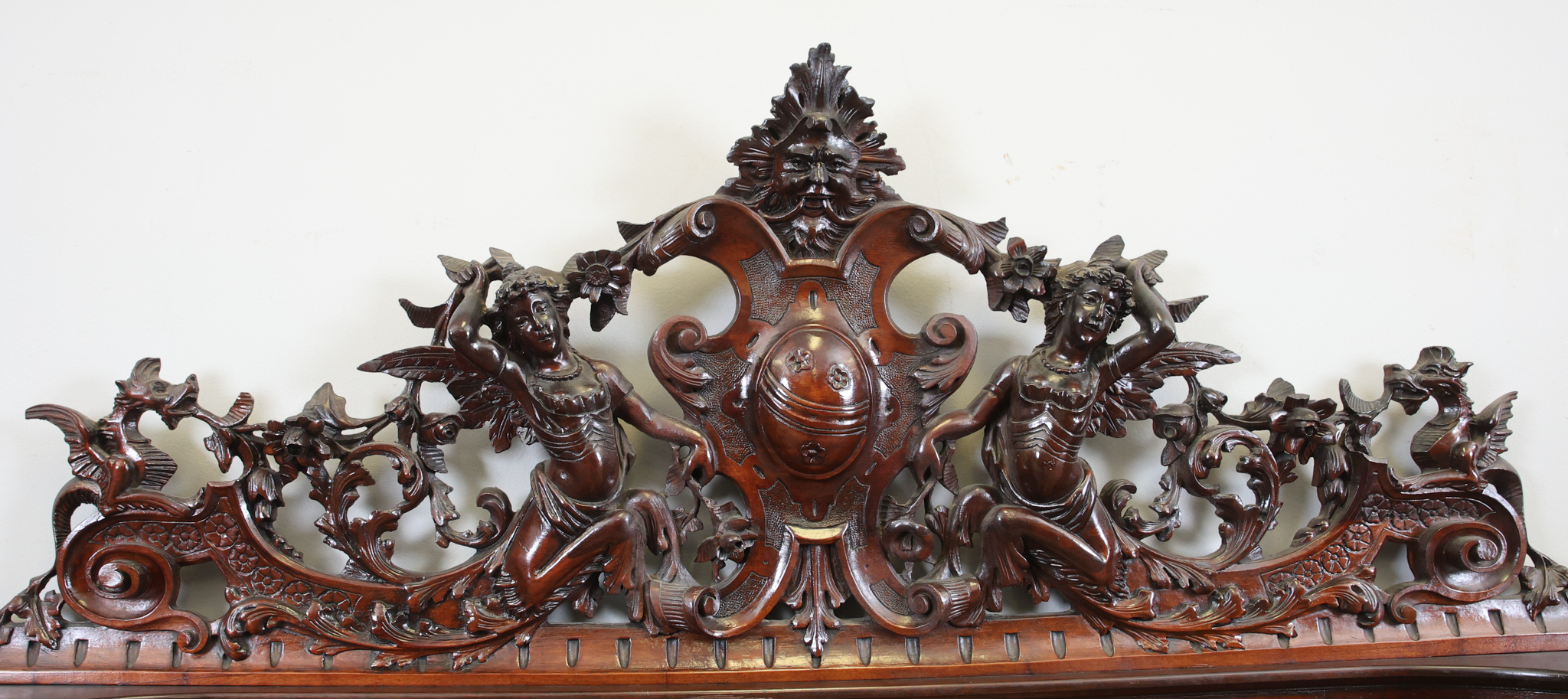
The extension dining table uses muscular male figures as prominent supports, visually suggesting the mythological Atlas bearing an immense weight. Around them is an extensive vocabulary of carved ornament that rewards close inspection. This kind of decoration wasn't simply added to make furniture look expensive. It connected an American interior with the artistic vocabulary of European history and mythology. Classical imagery carried associations with antiquity, learning, strength, and permanence—all qualities well suited to the grand domestic interiors of the period.
The Gilded Age Dining Room as a Complete Interior
One of the most interesting aspects of the R.J. Horner group in the September auction is that it allows us to consider individual pieces as components of a larger decorative scheme. The late nineteenth-century dining room could be among the most impressive rooms in an affluent home. A substantial table formed its center, but surrounding furnishings were equally important. Sideboards provided storage and serving surfaces; china cabinets displayed ceramics and glass; servers supported the rituals of dining; and matching chairs helped unify the room visually. In other words, furniture was often conceived as an ensemble.
The R.J. Horner & Co. Atlas Figural Sideboard in the September auction makes the point dramatically. Monumental carved figures flank the lower case, while masks, scrolling ornament, figures, and deeply carved decorative panels cover much of the façade. Above, the mirror and elaborate crest extend the design vertically, giving the piece an architectural presence. At approximately 90 inches high and 70 inches wide, according to the auction information provided, it was clearly intended to command attention within a room.
Displaying a Household’s Treasures
The accompanying R.J. Horner & Co. Atlas Figural China Cabinet fulfilled another important function.
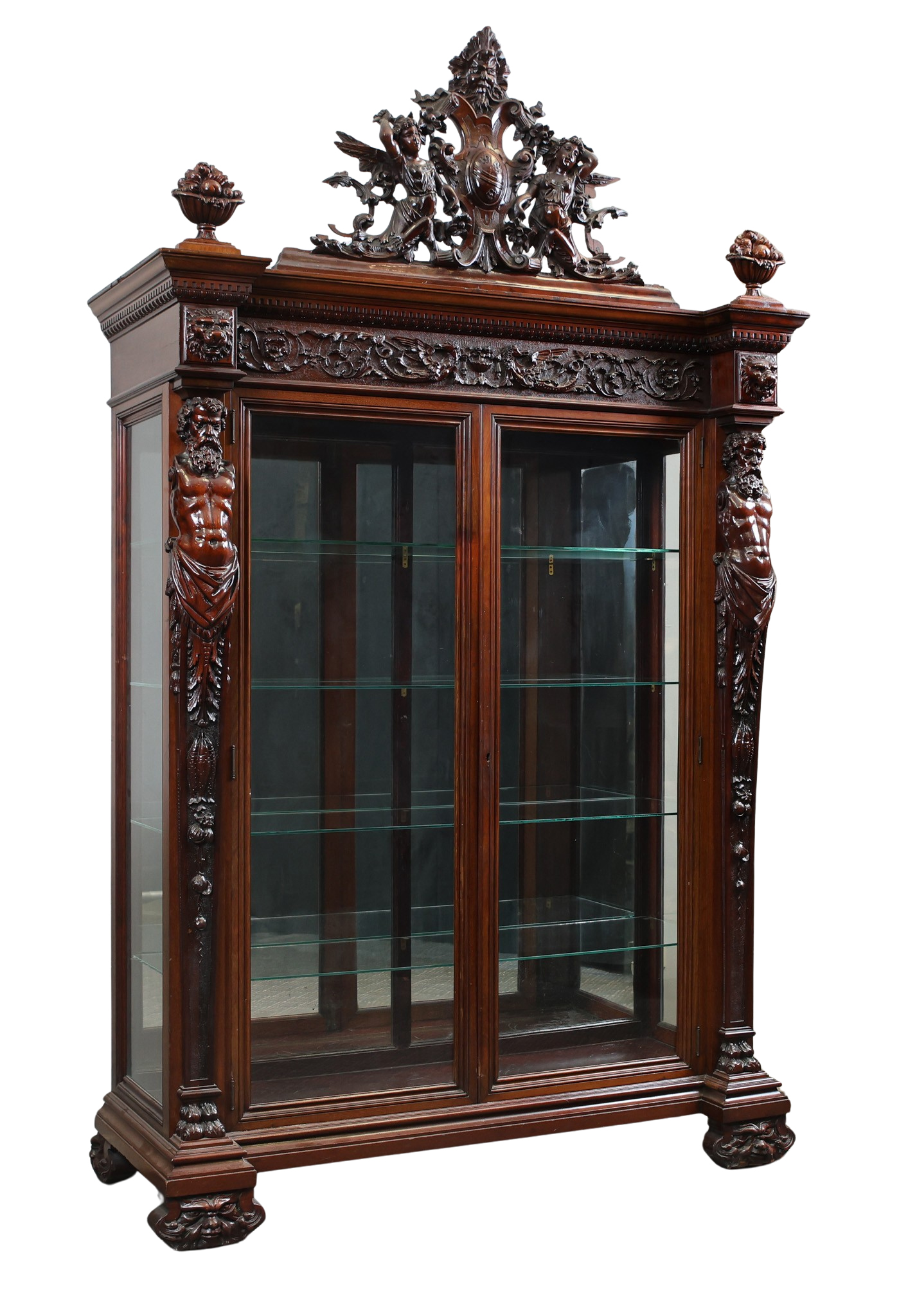
Behind its large glazed doors, ceramics, porcelain, glass, and other decorative objects could become part of the visual experience of the dining room itself. Rather than concealing possessions, cabinets of this type provided a stage on which they could be displayed. Here again, the cabinet is more than a container. Large carved male figures form powerful vertical accents on either side, while the crest, frieze, feet, and architectural moldings create a unified composition. Together with the table and sideboard, it demonstrates how a dining suite could establish the identity of an entire room.
A Table Designed to Command the Room
At the center of such an interior was the dining table. Their carved details continue the broader interest in animal and classical imagery seen throughout Horner's work. Repeated motifs helped establish continuity across a room, even when individual furniture forms differed considerably. For collectors today, these details also encourage close examination. The quality and depth of carving, construction, proportions, hardware, labels or marks, condition, and history of individual pieces all contribute to understanding furniture attributed to a particular maker.
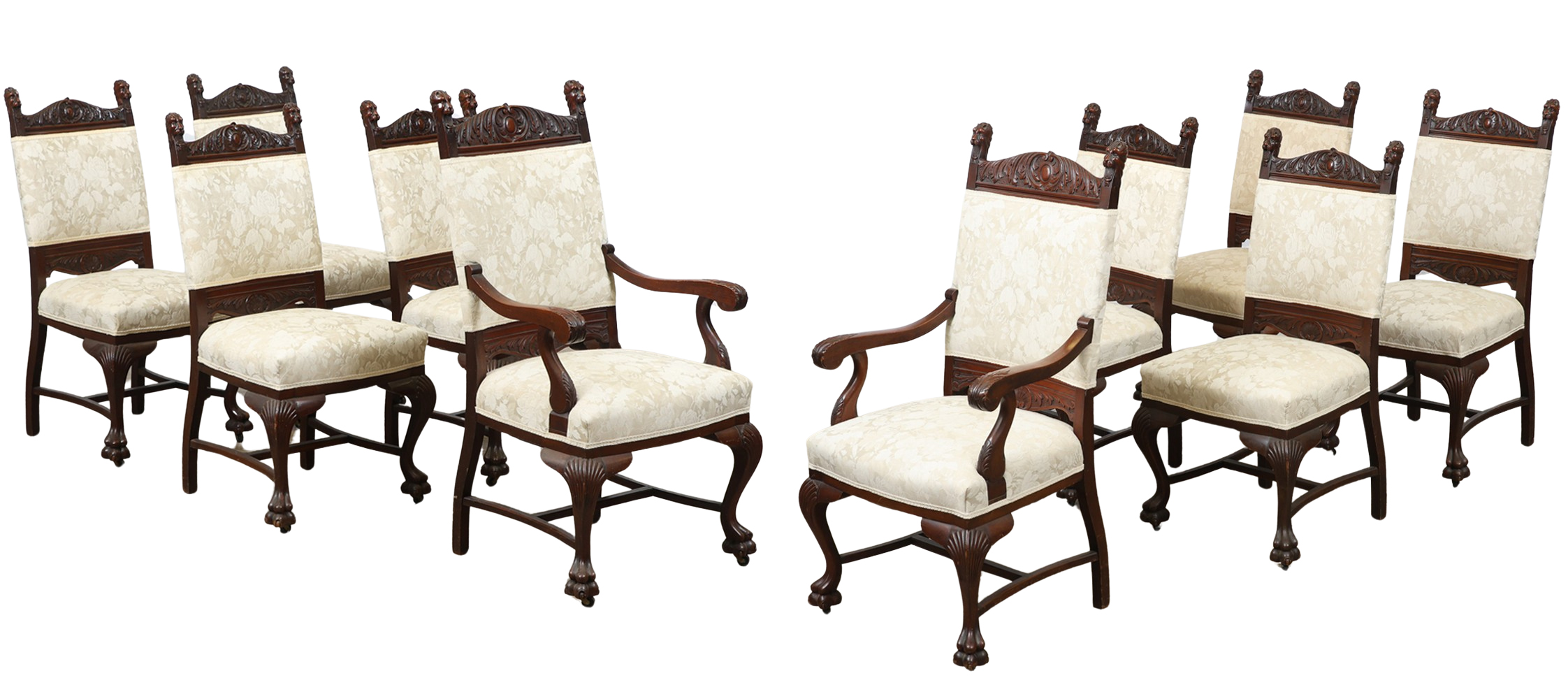
R.J. Horner & Co. Lion's-Head Dining Chairs included in Alderfer’s September 10 Fine Arts and Mid Century Modern Auction.
R.J. Horner, Tiffany & Co., and a Remarkable Tall-Case Clock
One object in the September auction stands somewhat apart from the dining group while broadening the story of Horner furniture: an R.J. Horner & Co. for Tiffany & Co. tall-case chime clock.
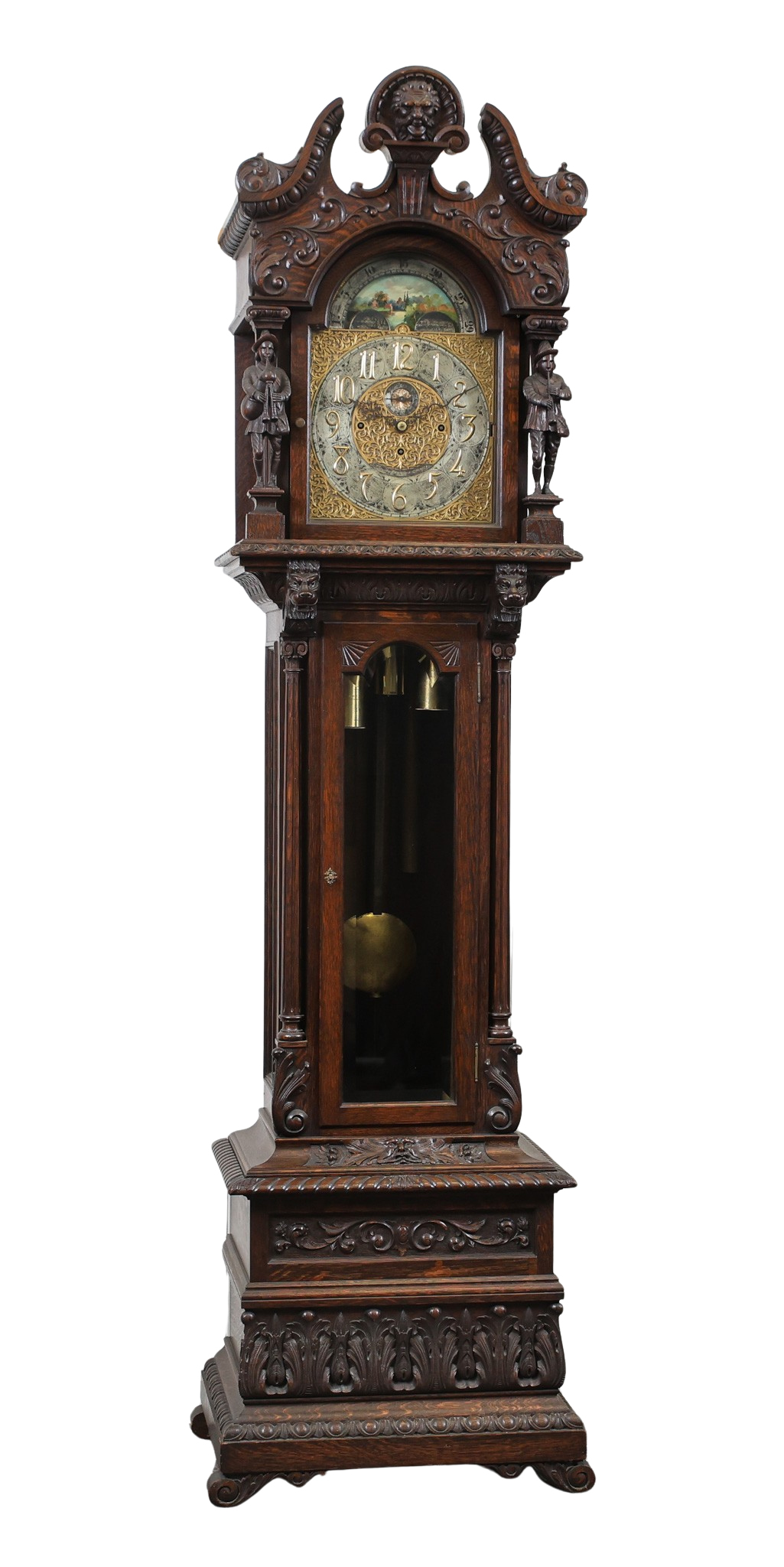
The clock combines an elaborately carved wooden case with an equally ambitious dial and chime mechanism. Standing approximately 97 inches high according to the auction listing, its scale alone gives it the presence of a piece of architecture. Its carving is especially revealing. Scrolls and foliage surround the hood, while a prominent mask crowns the composition. Carved standing figures flank the dial, continuing the fascination with figurative ornament seen elsewhere in Horner's work.
The association with Tiffany & Co. places the clock within the broader world of luxury retail and decorative arts in turn-of-the-century New York. Rather than treating that relationship more broadly than the evidence permits, the clock itself provides a tangible example of how Horner's furniture-making could intersect with another prominent name in American luxury.
Why R.J. Horner Still Matters
The decorative tastes of the Gilded Age can seem far removed from modern minimalism. Yet that difference is precisely part of what makes R.J. Horner furniture so compelling today. These objects preserve evidence of a period when highly skilled carving remained central to luxury furniture production. Their surfaces reveal the labor of craftsmen translating mythology, historical design, architecture, and natural forms into wood. Horner furniture also tells a broader American story. The company emerged during a period when American manufacturers were increasingly capable of producing ambitious furnishings for clients who once might have looked primarily toward Europe. New York had become an international center of wealth, architecture, collecting, and interior decoration, and firms such as R.J. Horner participated directly in that transformation. The company would eventually become associated with George C. Flint & Co. in the 1910s, marking the end of R.J. Horner's independent Gilded Age chapter. Yet the furniture survives as evidence of the extraordinary ambitions of American decorative arts around the turn of the twentieth century.
Highlights from Alderfer’s September 10 Fine Arts and Mid Century Modern Auction
The R.J. Horner works appearing in Alderfer Auction’s September 10 Fine Arts and Mid Century Modern Auction provide a particularly useful opportunity to encounter this history through the objects themselves. The group includes an Atlas Figural Extension Dining Table, Atlas Figural Sideboard, Atlas Figural China Cabinet, Atlas Figural Server, lion's-head dining chairs, and an R.J. Horner & Co. for Tiffany & Co. Tall-Case Chime Clock. Together, they illustrate the scale, carving, imagery, and architectural character that have made the firm's more elaborate furniture immediately recognizable to generations of collectors. More importantly, they provide a glimpse into an American interior from another age—one in which furniture was expected not merely to occupy a room, but to help define it. More than a century later, the figures of Atlas still shoulder their tables, lions still guard cabinets and chairs, and carved mythological creatures still emerge from dark wood. The fashions surrounding them have changed many times over. The craftsmanship remains remarkably tangible. The R.J. Horner & Co. furniture will be offered in Alderfer Auction’s September 10 Fine Arts and Mid Century Modern Auction. Readers can view complete lot descriptions, additional photographs, dimensions, condition information, and bidding details in the online auction catalog.