
Pennsylvania Impressionism Leads Alderfer’s March 19 Fine & Decorative Arts Auction
Pennsylvania Impressionism Leads Alderfer’s March 19 Fine & Decorative Arts Auction
Edited by: Christian Answini | Fine Art Department
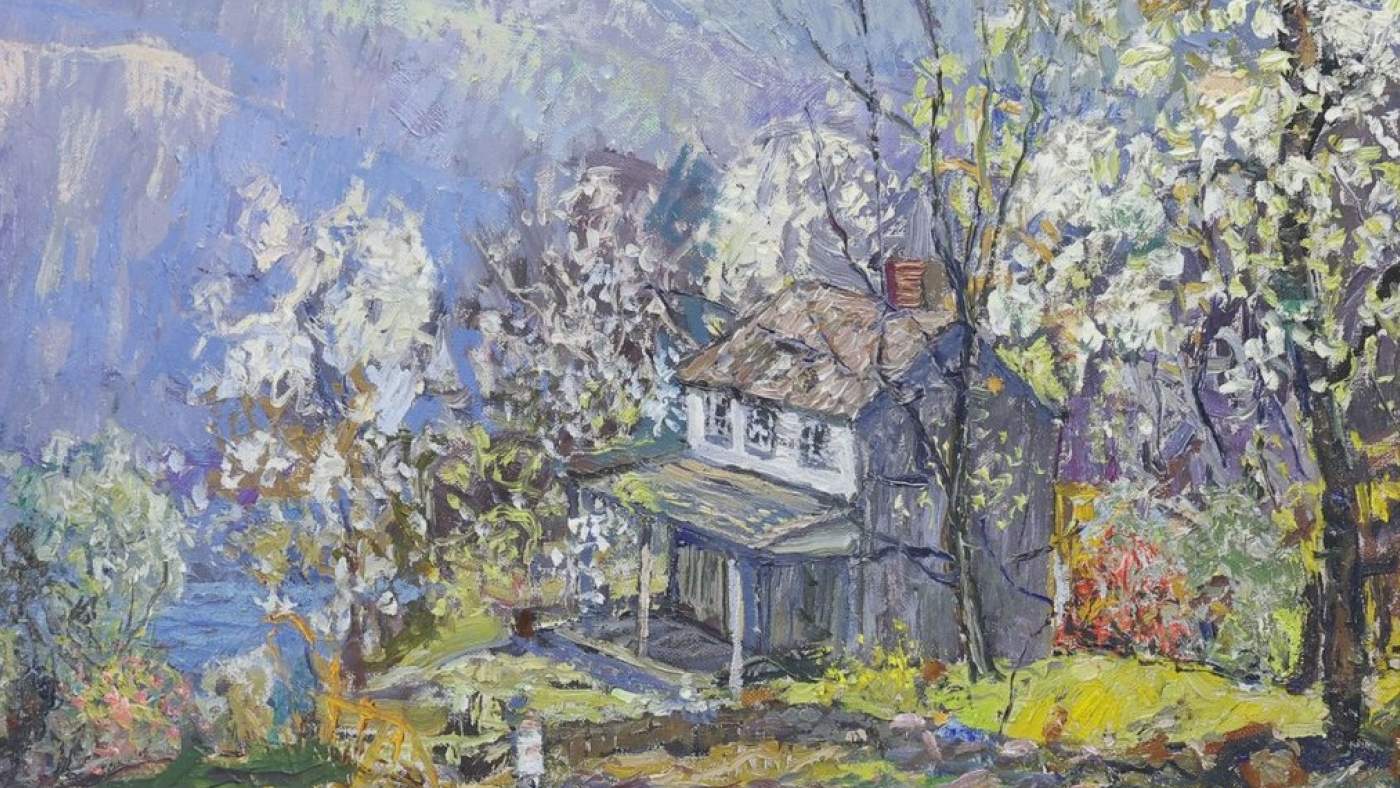
Pennsylvania Impressionism stands at the center of Alderfer Auction’s March 19, 2026 Fine & Decorative Arts sale, where a concentrated group of major Bucks County painters anchors the highest starting bids. Works by Edward Willis Redfield, Daniel Garber, Fern Coppedge, George Sotter, Walter Emerson Baum, and George Stengel collectively position the auction as one of the season’s strongest regional American art offerings. This grouping reflects the enduring market strength of Pennsylvania Impressionism, a movement prized for its direct observation of landscape, confident brushwork, and identifiable regional subjects. Collectors consistently gravitate toward artists associated with New Hope and its surrounding communities, where winter light, rural architecture, and tonal atmosphere became defining visual signatures. When multiple leading names appear together in a single sale, it often signals advanced collecting histories and long-held ownership—conditions that often correlate with quality and authenticity.
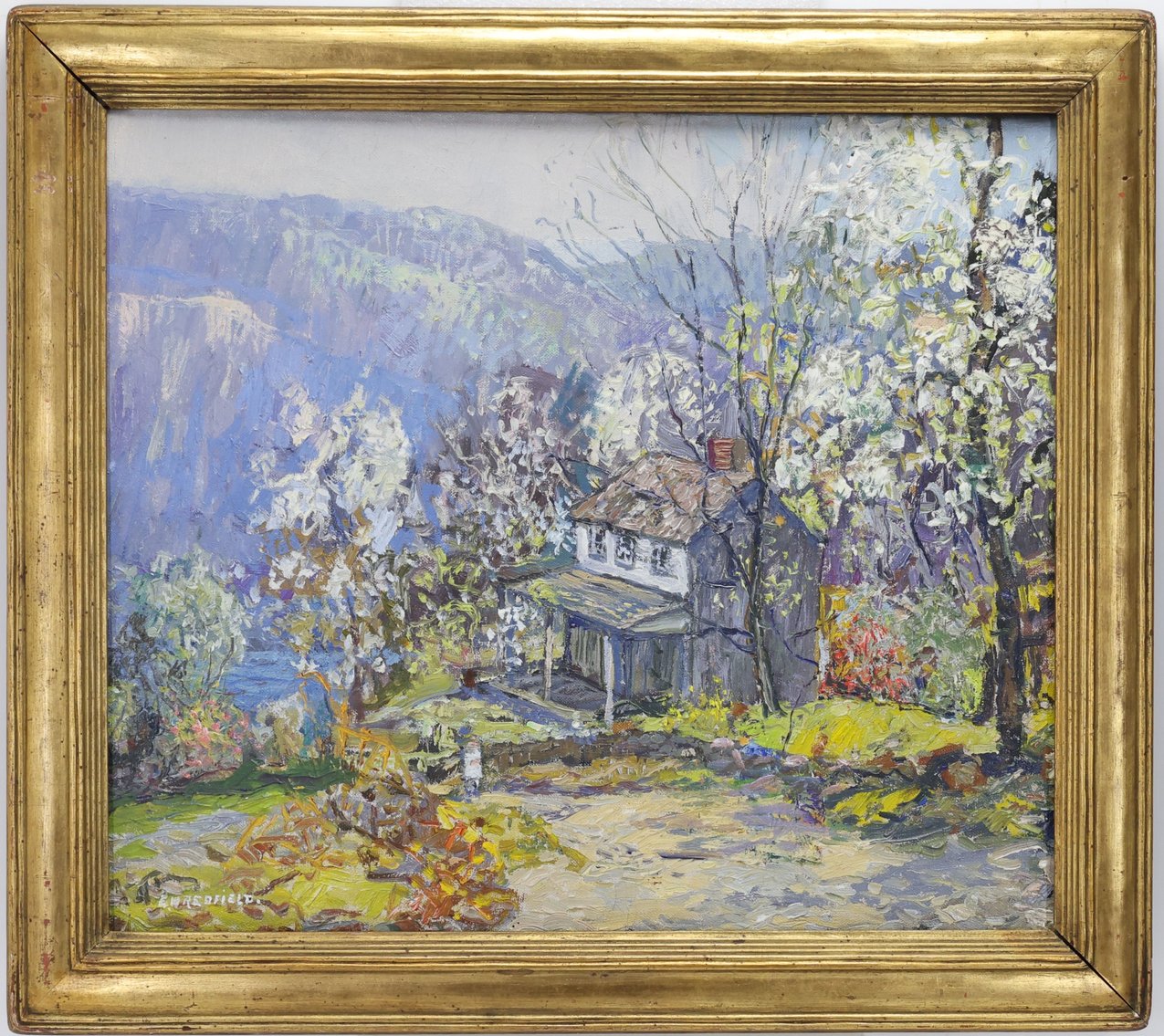
Edward Willis Redfield (1869 - 1965)
The Market Strength of the Bucks County School
The artists represented in this sale formed the core of the Pennsylvania Impressionist movement that developed along the Delaware River in the early twentieth century. At a time when American painters were increasingly drawn to European modernism, these artists instead turned toward the local landscape, interpreting Pennsylvania farmland, villages, and waterways through direct observation and painterly immediacy. Edward Willis Redfield emerged as the movement’s most forceful landscape painter, known for working outdoors in all seasons and applying paint with thick, energetic strokes that captured atmosphere and structure simultaneously. Daniel Garber approached the same environment with a more ordered sensibility, balancing architectural elements and landscape geometry through refined color relationships and compositional clarity. Fern Coppedge brought a distinctive perspective to village architecture and winter light, often rendering snow-covered rooftops and clustered houses in luminous, rhythmic arrangements.
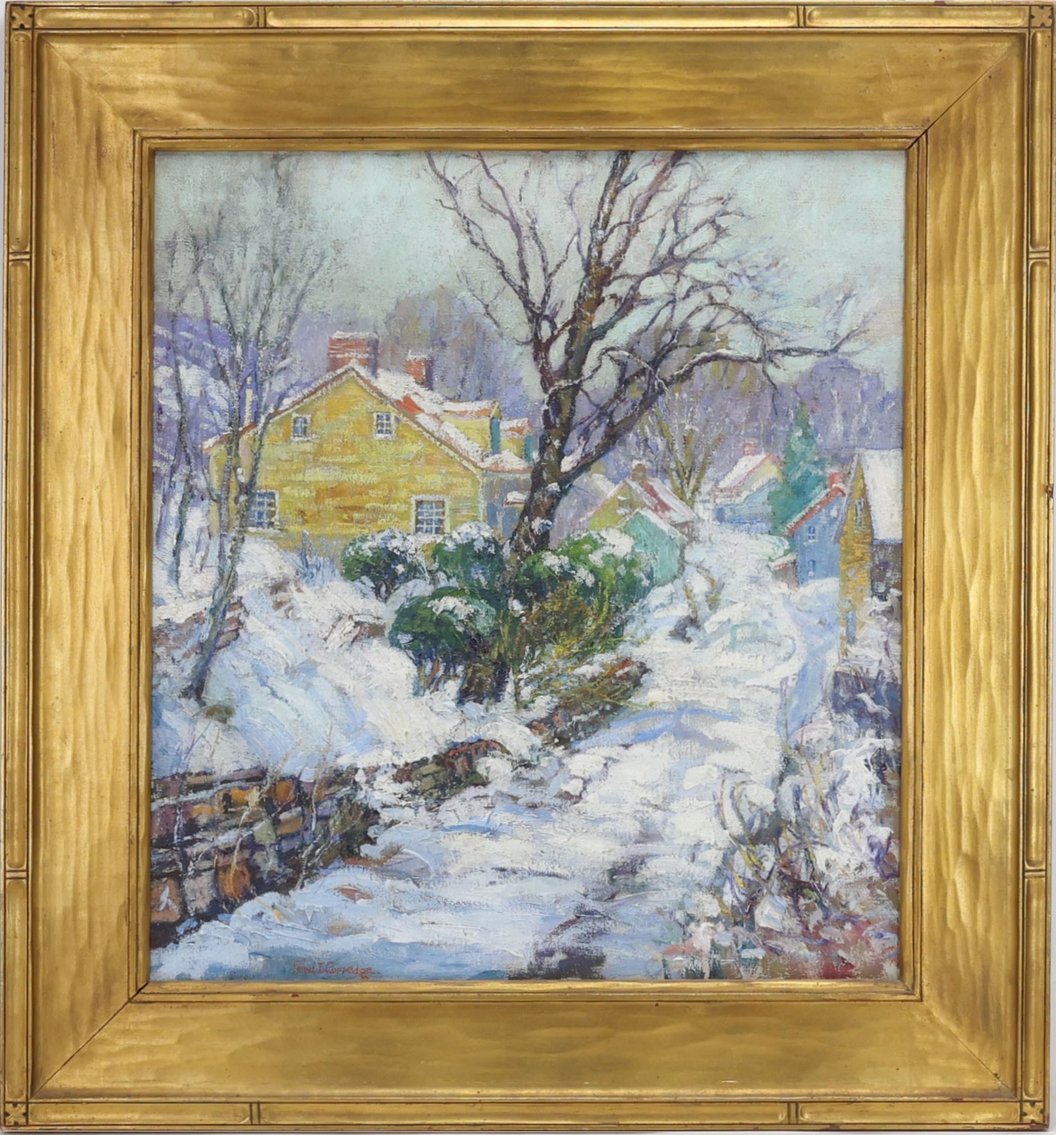
Fern Isabel Kuns Coppedge (1883 - 1951)
George Sotter expanded the movement’s range through tonal and nocturne subjects, particularly harbor and evening scenes that emphasized mood and atmospheric unity. Walter Emerson Baum, deeply connected to the region both artistically and institutionally, translated local roads, mills, and countryside into accessible yet painterly compositions that appealed to generations of collectors. George Stengel contributed expressive rural imagery grounded in the same Bucks County environment, reinforcing the shared visual language of the group. Together, these artists created a regional school that remains one of the most cohesive and recognizable movements in American art. Their work carries both historical significance and enduring decorative appeal, making Pennsylvania Impressionism one of the most stable segments of the American art market.
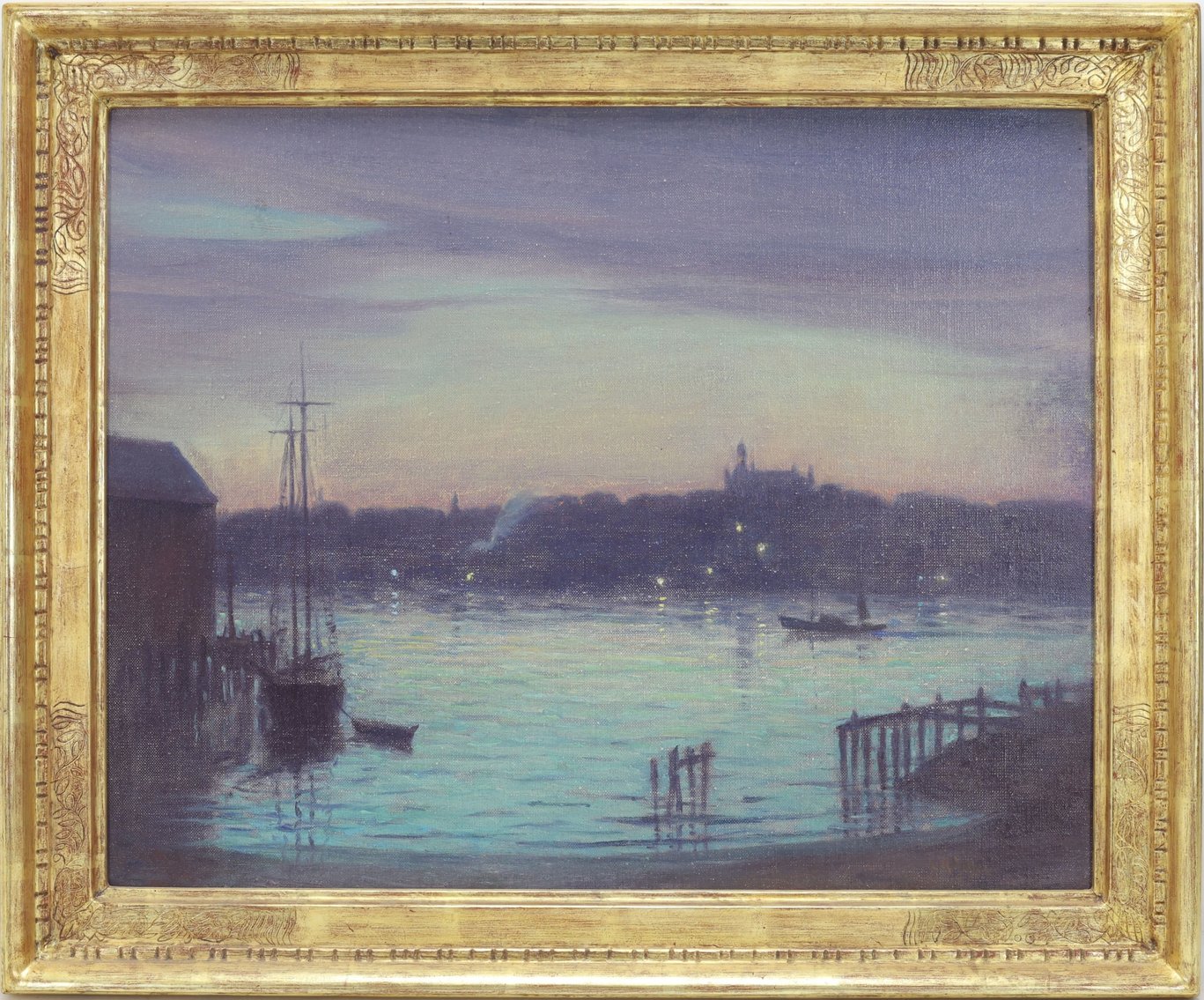
George William Sotter (1879 - 1953) Badura Frame FA
Why Collectors Continue to Prioritize Pennsylvania Impressionism
Several factors contribute to the sustained demand for Bucks County painters at auction. First is the movement’s strong sense of place. Unlike broader Impressionist traditions, Pennsylvania Impressionism is tied to specific, identifiable geography—New Hope, Lumberville, Center Valley, and surrounding communities. This geographic clarity provides both historical grounding and regional pride for collectors, particularly those connected to the Mid-Atlantic. Second is the movement’s balance between realism and painterly expression. Pennsylvania Impressionists maintained recognizable subject matter while still employing visible brushwork and atmospheric color. This combination allows works to function equally as scholarly American art and as visually engaging interior focal points.
Third is the seasonal identity of the movement, especially winter imagery. Snow scenes and cold-weather landscapes appear prominently across the artists’ oeuvres, reinforcing the perception of year-round plein-air commitment. Collectors often view winter works as particularly characteristic examples of the school, associating them with authenticity and painterly challenge. Finally, many Pennsylvania Impressionist paintings have remained in private collections for decades, creating periods of limited market supply followed by concentrated auction appearances. When multiple works emerge together, as in the March 19 sale, collectors recognize the opportunity to evaluate quality across artists within a single event.
Works in the Auction: Range Within a Unified Tradition
Several works in the auction illustrate why these artists command top-tier openings. Redfield’s landscapes exemplify the vigorous brush and plein-air immediacy that define his market leadership, with surfaces built through layered, directional strokes that convey both mass and motion. Garber’s compositions demonstrate the movement’s structural elegance, integrating architecture and landscape through measured geometry and controlled color harmony. Coppedge’s winter scenes capture the luminous snow-covered architecture that remains highly sought among collectors, translating village rooftops and clustered buildings into rhythmic pattern and color contrast. Sotter’s tonal harbor imagery introduces a quieter atmospheric register, emphasizing dusk light and reflective water surfaces. Baum’s regional views and Stengel’s rural compositions broaden the representation of Pennsylvania Impressionism’s stylistic range, reinforcing how multiple artists interpreted the same landscape tradition.
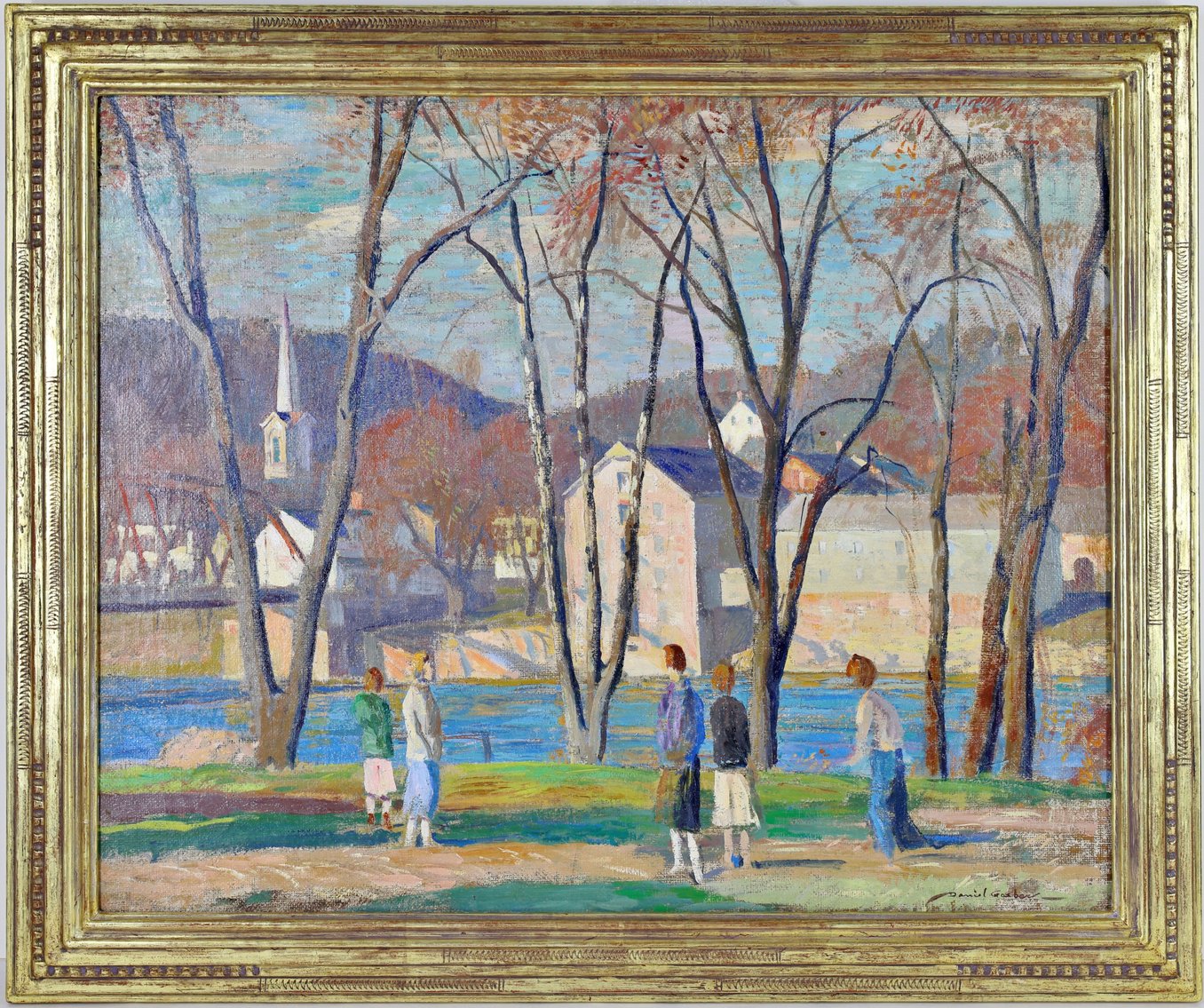
Daniel Garber (1880 - 1958) Badura Frame
The presence of notable period framing, including works housed in respected makers’ frames, further reinforces authenticity and period integrity—factors that sophisticated bidders weigh heavily. Period frames not only support historical presentation but also indicate long-term preservation and consistent ownership, qualities closely associated with quality examples.
A Cohesive Collecting Opportunity
Beyond individual artists, the March 19 selection presents a cohesive narrative of American regional art at its most influential. Pennsylvania Impressionism occupies a unique position within American art history: rooted in place, stylistically unified, and continuously collected across generations. The simultaneous presence of Redfield, Garber, Coppedge, Sotter, Baum, and Stengel creates an auction environment rarely achieved outside major institutional or estate dispersals. For collectors, such concentration allows direct comparison of painterly approach, subject interpretation, and condition across the movement’s leading figures. For new buyers, it offers an entry point into a historically grounded and visually accessible collecting field. For regional audiences, it represents the artistic identity of Bucks County and the Delaware River Valley rendered through the artists who defined it.
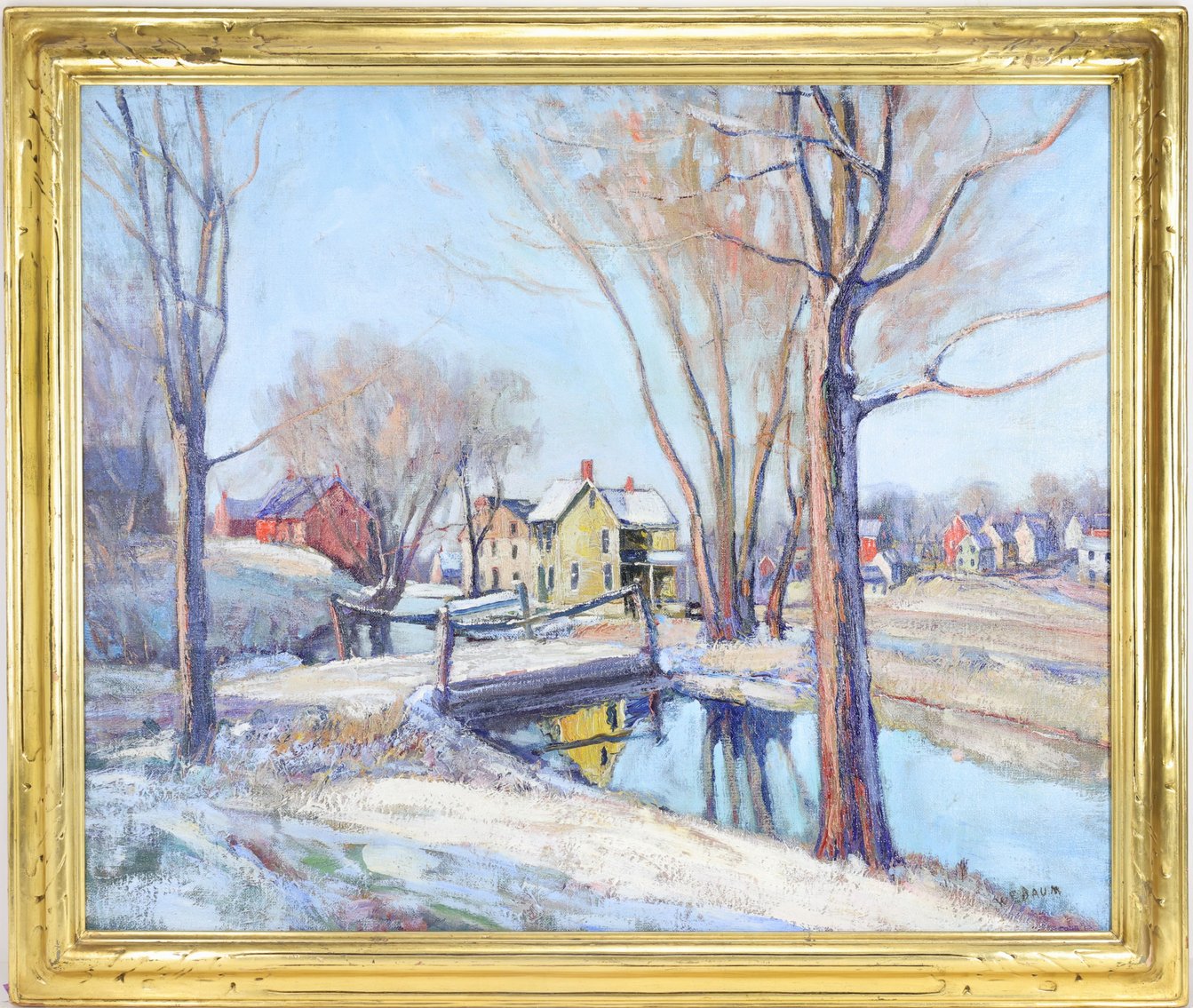
Walter Emerson Baum (1884 - 1956)
Preview and Bidding Information
Alderfer Auction’s March 19, 2026 Fine & Decorative Arts sale offers collectors an opportunity to acquire works from this defining American movement within a single event. Public preview will be held March 16–18 from 9 am to 3 pm daily. The auction is conducted online with phone bidding available through Alderfer Auction. Pennsylvania Impressionism remains one of the most enduring and recognizable expressions of American landscape painting. Its continued strength in the market reflects not only historical importance but also the lasting appeal of regional light, seasonal atmosphere, and direct engagement with place. The March 19 auction brings these qualities together through a focused presentation of Bucks County painters whose work continues to define the movement—and the region—from which it emerged.