
From the Wrist to the Mantel: The Ingenious Watchmaking of Jaeger-LeCoultre
From the Wrist to the Mantel: The Ingenious Watchmaking of Jaeger-LeCoultre
Written by: Christian Answini | Senior Fine Art Specialist
Few names in Swiss watchmaking demonstrate mechanical creativity quite like Jaeger-LeCoultre. From sophisticated automatic wristwatches small enough to disappear beneath a shirt cuff to clocks designed to run using tiny changes in atmospheric temperature, the manufacture has spent generations finding ingenious ways to measure time. Five examples offered in Alderfer Auction’s October 15 Collectors Auction provide an opportunity to explore that history from two very different perspectives. On the wrist are a Jaeger-LeCoultre Ellipse Ref. 5002.42, a LeCoultre Powermatic, and a striking LeCoultre Futurematic Power Reserve. Moving from wrist to mantel are a decorative Jaeger-LeCoultre Marina desk clock and a Jaeger-LeCoultre Atmos, Caliber 519, circa 1952.
Together, they demonstrate something collectors have long appreciated about Jaeger-LeCoultre: this was a company interested not only in making beautiful timepieces, but in reconsidering how a mechanical timepiece could work.
From LeCoultre to Jaeger-LeCoultre.
The story begins in Switzerland’s Vallée de Joux, where Antoine LeCoultre established a workshop in 1833. Over the following decades, LeCoultre developed a reputation for precision watchmaking and movement production. In the early twentieth century, LeCoultre began collaborating with Parisian watchmaker Edmond Jaeger. Their relationship ultimately led to the Jaeger-LeCoultre name familiar to collectors today. That history also explains something that can initially confuse collectors of vintage watches: not every watch associated with Jaeger-LeCoultre actually says “Jaeger-LeCoultre” on its dial. Many watches intended for the American market were sold under the LeCoultre name. As the examples in Alderfer’s October 15 auction illustrate, both signatures can therefore appear when exploring the company’s vintage production.
The Powermatic: Knowing When It’s Time to Wind
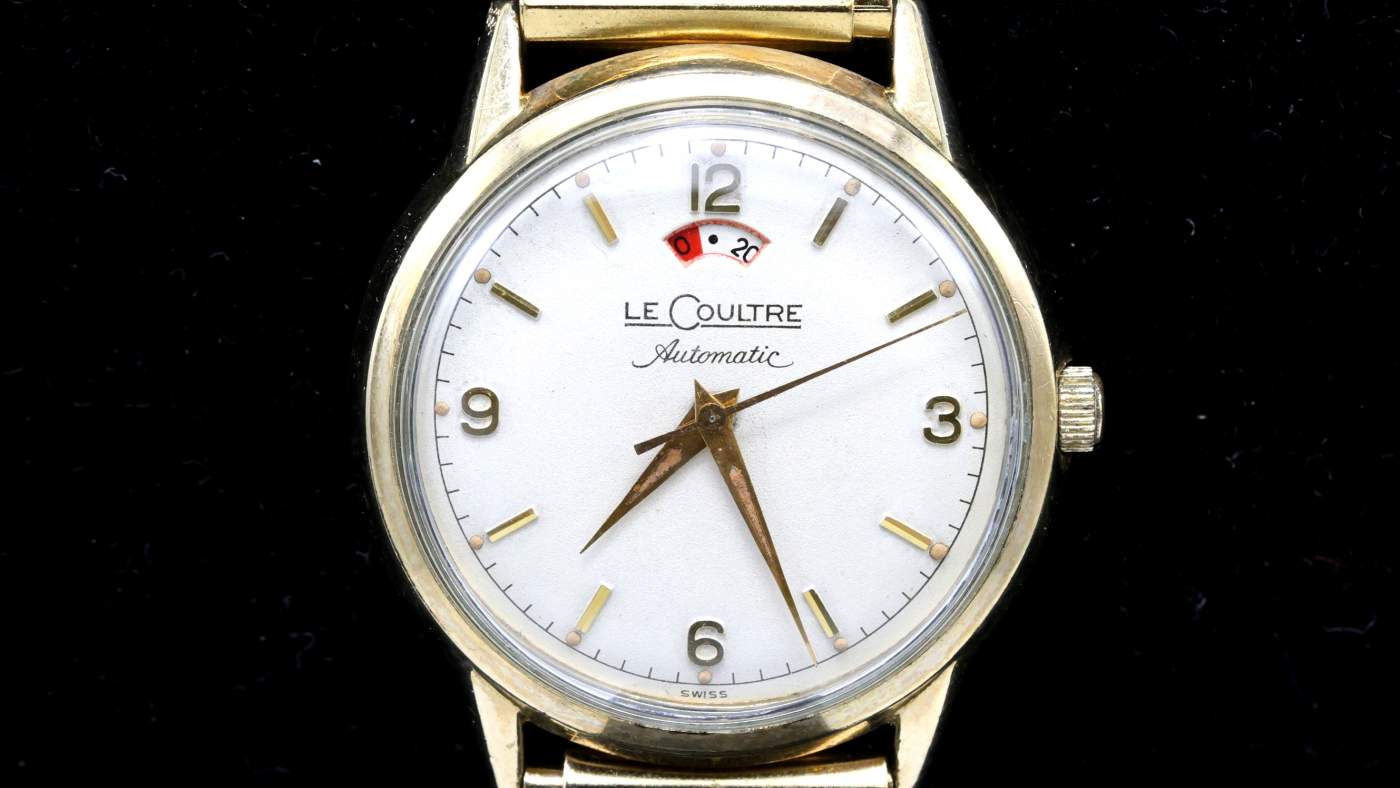
The LeCoultre Powermatic immediately reveals one of the company’s favorite themes: providing the wearer with more information about what is happening inside the watch. Above the center of the dial is a small power-reserve display. Rather than simply telling the wearer the time, this feature provides an indication of the energy remaining in the watch’s mainspring. Today, power-reserve indicators are familiar to many mechanical-watch enthusiasts, but historically they represented another way of making the mechanics of a watch visible and useful to its owner. The Alderfer example combines that feature with a restrained light-colored dial, applied markers, Arabic numerals at 12, 3, 6, and 9, and the wonderfully direct word “Automatic.” It is a practical complication presented with classic mid-century style.
The Futurematic: Rethinking the Automatic Watch
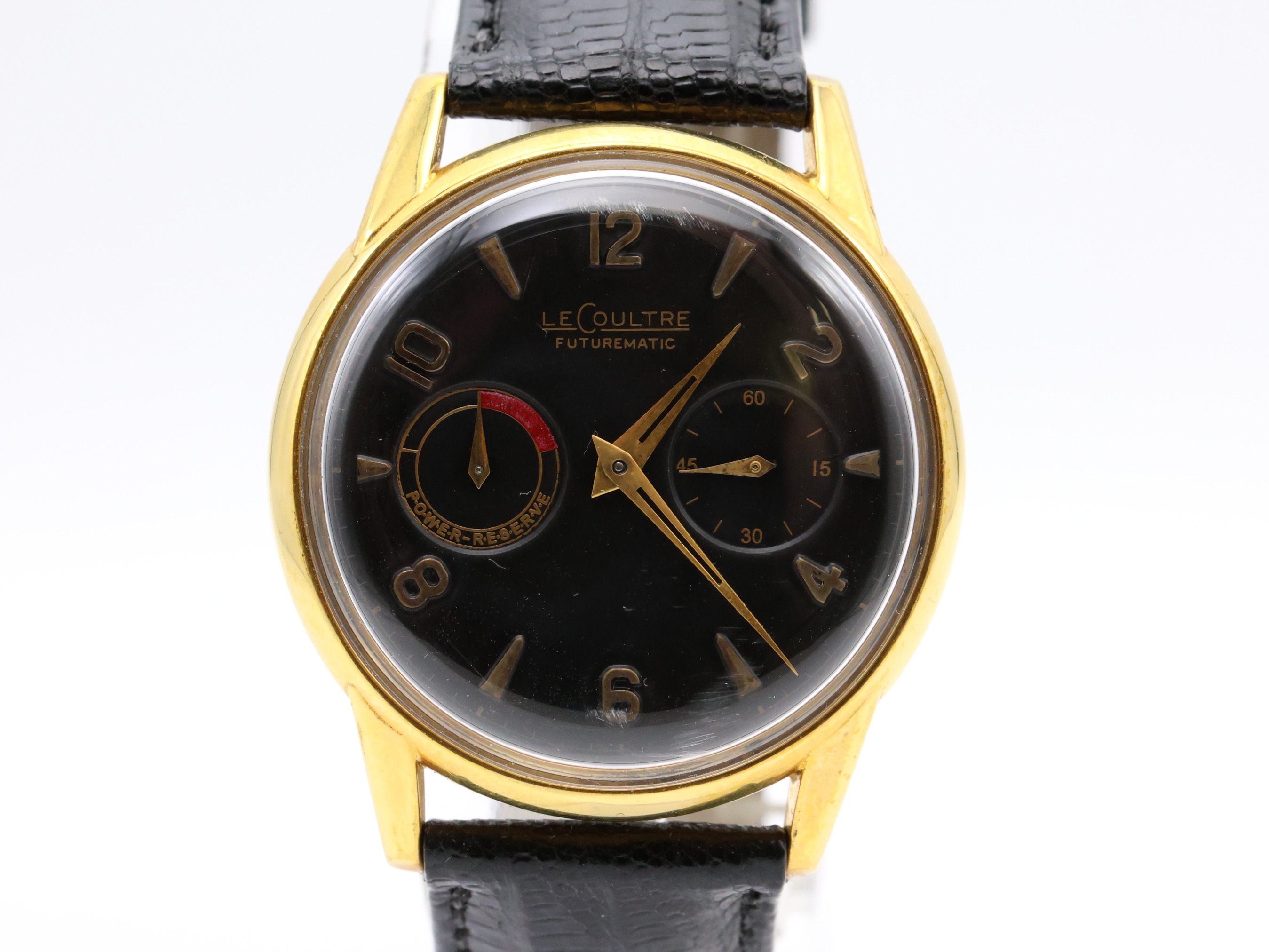
LeCoultre Futurematic Power Reserve automatic wristwatch, offered in Alderfer Auction’s October 15 Collectors Auction.
If the Powermatic demonstrates mechanical cleverness, the LeCoultre Futurematic takes the idea further. The Futurematic is one of the more distinctive vintage LeCoultre designs, and the example in the October auction certainly looks the part. Its black dial features two subsidiary displays positioned on opposite sides of the dial. One displays the running seconds, while the other provides the power-reserve indication. Gold-tone numerals, markers, and hands create dramatic contrast against the dark background. The resulting design is unmistakably mid-century but surprisingly modern. The Futurematic is also remembered for an unusual feature that isn't immediately apparent when viewing it from the front: there is no conventional winding crown projecting from the side of the case. Its automatic winding system and unconventional approach to setting the watch made it a particularly forward-looking design. Even the name seems to announce its intentions: Futurematic. For collectors, it is a reminder of a period when watch companies were competing not only to make watches more precise, but also to rethink how people interacted with them.
The Ellipse: A Different Kind of Modernism
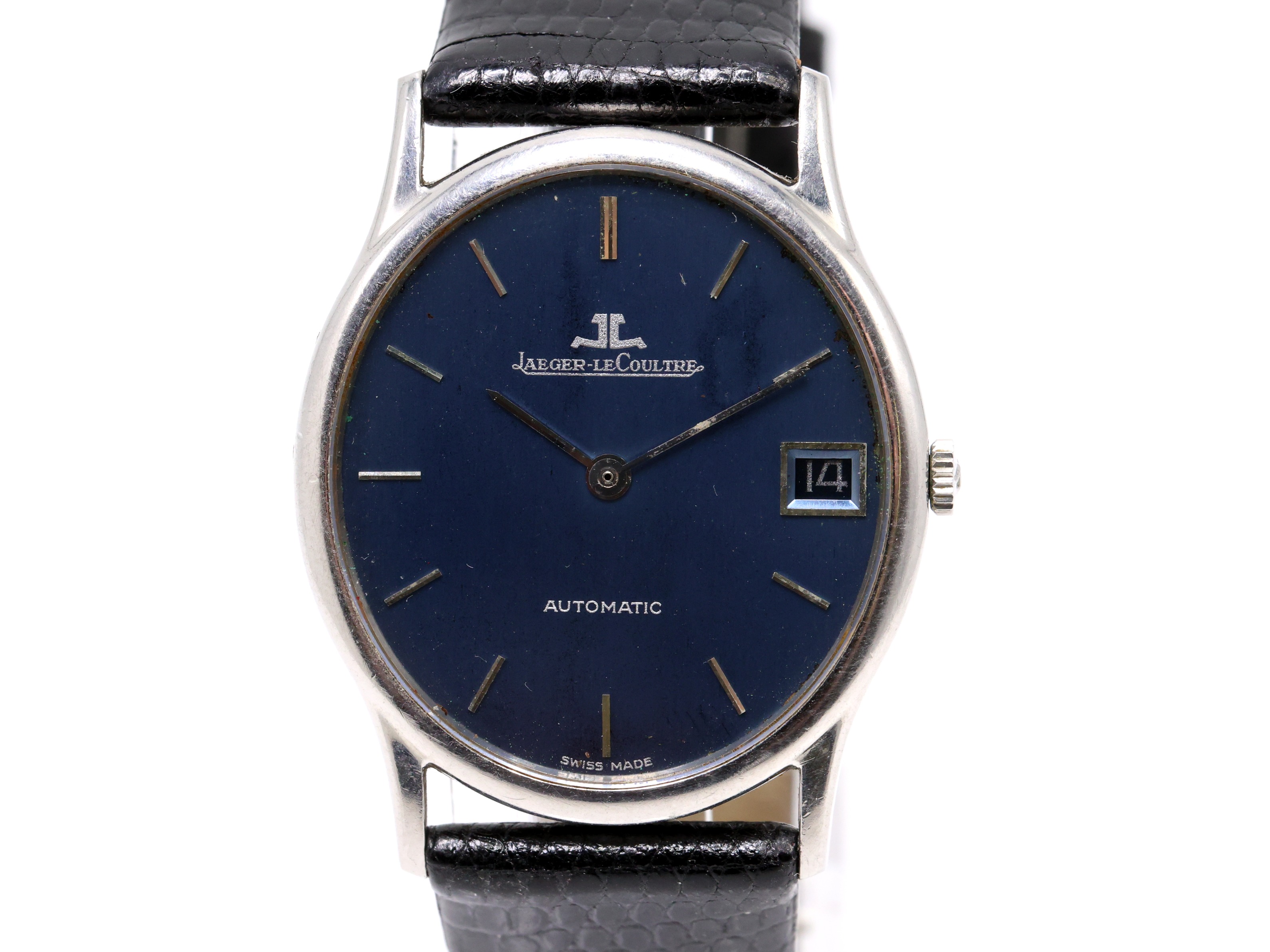
Jaeger-LeCoultre Ellipse Ref. 5002.42 automatic wristwatch, offered in Alderfer Auction’s October 15 Collectors Auction.
The Jaeger-LeCoultre Ellipse Ref. 5002.42 shows another side of the manufacture. Here, the emphasis shifts away from visible mechanical complications and toward shape, proportion, and restrained design. The elongated case surrounds a deep blue dial with slender applied hour markers and a date aperture at 3 o’clock. The absence of unnecessary ornament allows the unusual case shape and color of the dial to dominate. Placed beside the Powermatic and Futurematic, the Ellipse also demonstrates how much wristwatch design changed over the decades. Jaeger-LeCoultre could move from the instrument-like displays of its mid-century watches toward the sleek geometric forms associated with later twentieth-century design without abandoning its mechanical identity. But the company's ingenuity wasn't limited to the wrist. It also appeared on the desk and mantel.
The Marina: When a Clock Becomes Decorative Art
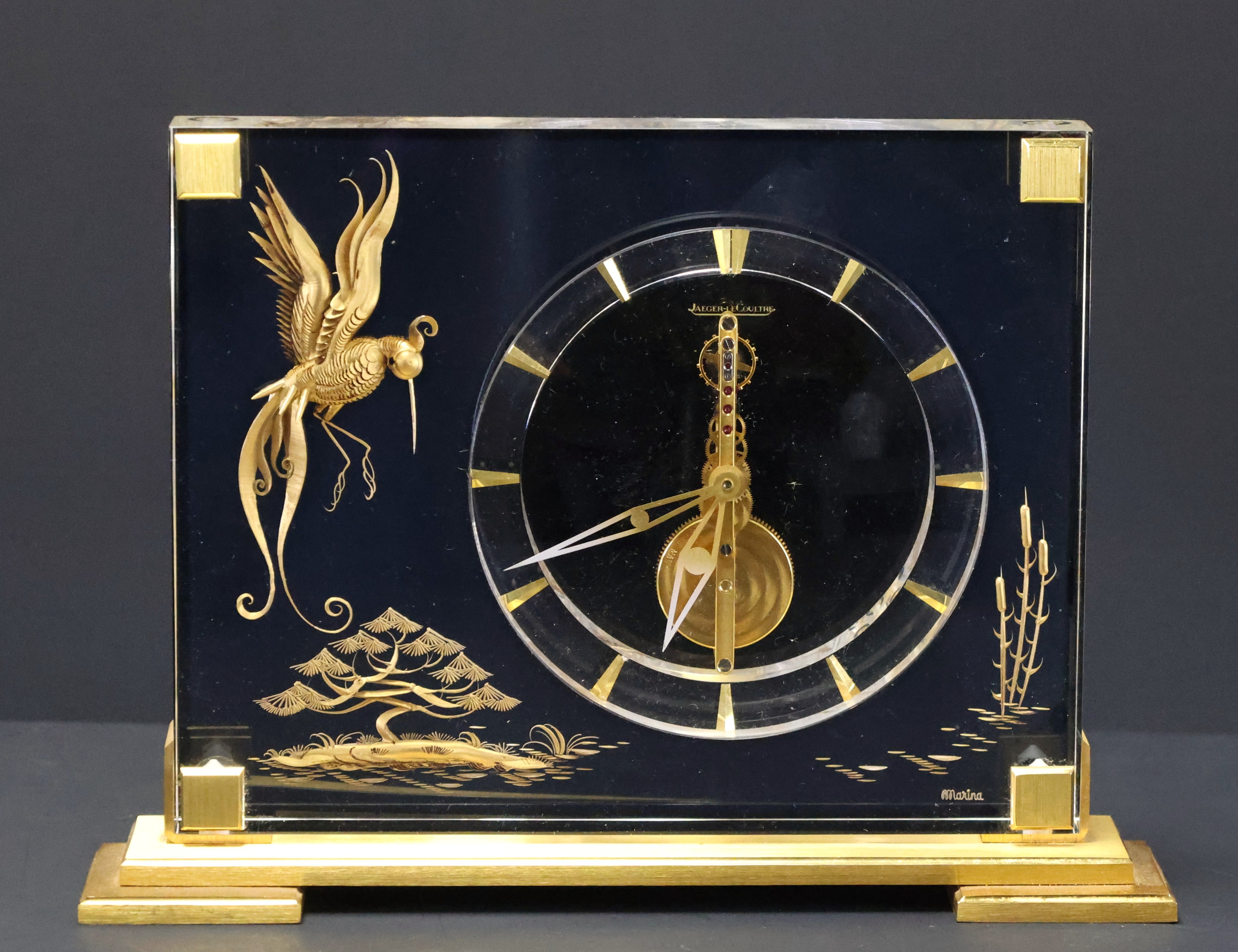
Suggested caption: Jaeger-LeCoultre Marina desk clock with decorative bird motif, offered in Alderfer Auction’s October 15 Collectors Auction.
Suggested alt text: Jaeger-LeCoultre Marina desk clock with gilt bird and landscape decoration. The Jaeger-LeCoultre Marina desk clock transforms timekeeping into decorative art. The example offered at Alderfer places its clock mechanism within a transparent rectangular body decorated with a gilt bird and landscape. The exposed central mechanism becomes part of the composition rather than something hidden behind a conventional clock face. That transparency creates an intriguing visual effect. Mechanical components, hands, hour markers, decorative imagery, and the surrounding room seem to occupy the same space. The Marina therefore belongs comfortably in more than one collecting category. It can appeal to horological collectors, but its materials and decorative presentation also give it a natural place among mid-century decorative arts and design. And then there is the Atmos.
The Atmos Clock: Powered by the Room Around It
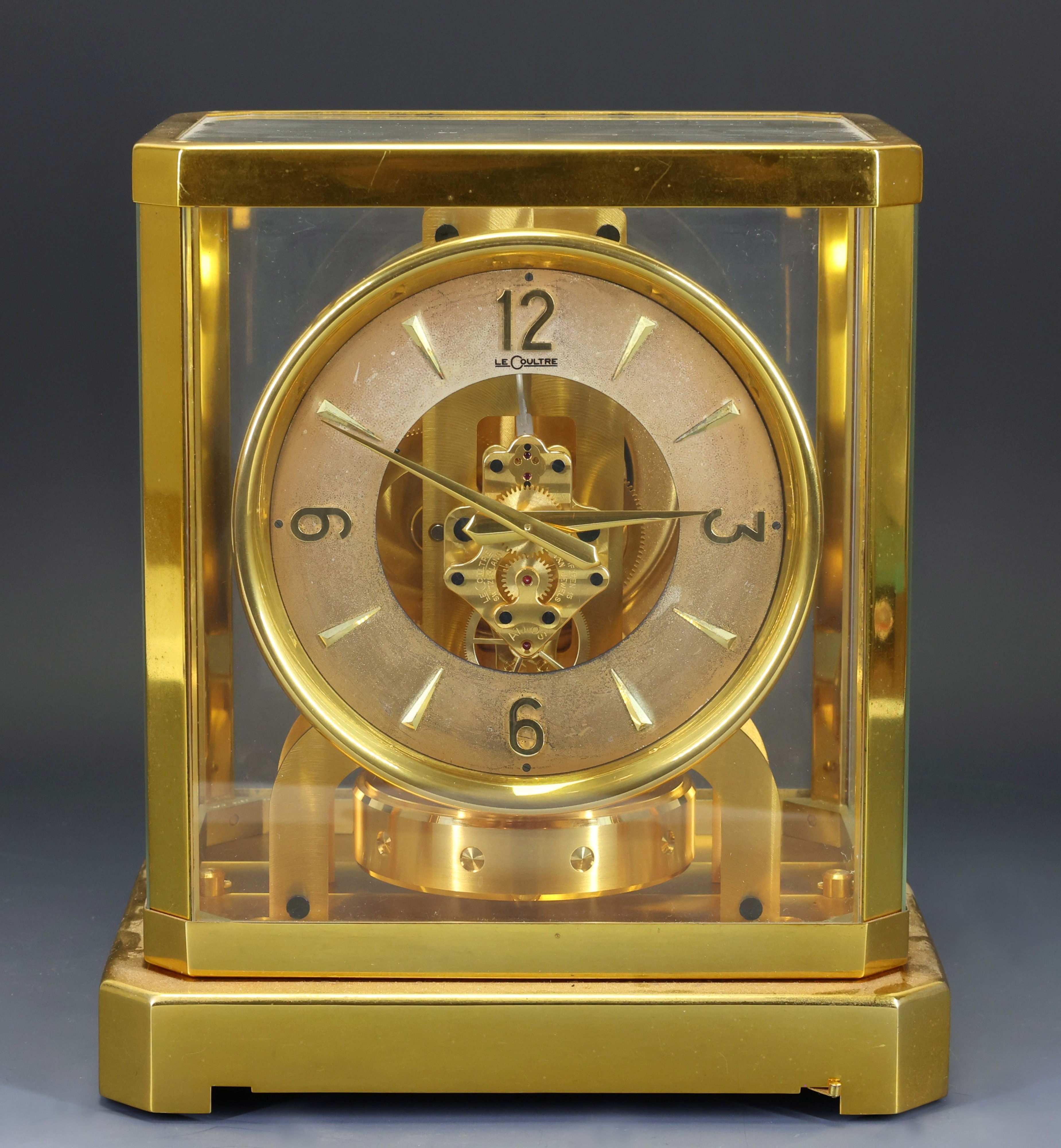
Jaeger-LeCoultre Atmos clock, Caliber 519, circa 1952, with Arabic numeral dial, offered in Alderfer Auction’s October 15 Collectors Auction.
Few mechanical clocks have a story quite like the Atmos. Instead of relying on conventional daily winding or an electric motor, an Atmos clock derives the energy necessary to operate from small changes in ambient temperature. A temperature-sensitive system expands and contracts as the surrounding temperature changes, supplying energy to the mainspring. The mechanism requires extraordinarily little energy to operate. Its slowly rotating torsion pendulum is part of what makes an Atmos so mesmerizing to watch: time seems to move differently inside its glass enclosure. The example in Alderfer’s October 15 auction is a Caliber 519 dating to circa 1952, with an Arabic numeral dial. Its gilt case and largely transparent construction allow the mechanics to remain visible, turning the movement itself into part of the clock's aesthetic appeal. That combination of science, engineering, and design helps explain why Atmos clocks have fascinated collectors for generations.
What Collectors Should Look for in Vintage Jaeger-LeCoultre
These five objects also illustrate why researching vintage Jaeger-LeCoultre can be rewarding. Collectors should pay attention to model and reference, movement, dial configuration, case material, condition, originality, signatures, and service history when known. With vintage pieces, alterations or replacement components can also affect collector interest. Branding deserves attention as well. A dial signed LeCoultre should not automatically be dismissed because it lacks the full Jaeger-LeCoultre name. Market and period can help explain how a particular piece was signed. For clocks, condition and mechanical operation deserve similar consideration. Prospective bidders should consult the individual Alderfer catalog descriptions and condition information for the specific watches and clocks being offered.
Five Timepieces, One Tradition of Innovation
Look at these five pieces together and a pattern emerges. The Powermatic communicates the amount of energy available to the watch. The Futurematic reconsiders the operation and layout of an automatic wristwatch. The Ellipse explores a sleek alternative to the traditional round case. Move to the clocks and the experimentation continues. The Marina merges horology with decorative art, while the Atmos turns subtle changes in the surrounding environment into the energy required to measure time. Different decades. Different forms. Different mechanisms. But behind them is the same fascination with what a timepiece can be.
From the Wrist to the Mantel
Great watchmaking isn't always about adding more complications. Sometimes innovation means finding a better way to show the energy remaining in a mainspring. Sometimes it means reconsidering the shape of a wristwatch. And sometimes it means creating a clock capable of drawing the tiny amount of energy it needs from changes in the temperature of the room around it. The watches and clocks featured in Alderfer Auction’s October 15 Collectors Auction offer five different expressions of that inventive spirit. From the vintage charm of the Powermatic and striking design of the Futurematic to the elegance of the Ellipse, decorative character of the Marina, and remarkable engineering of the Atmos, they demonstrate why Jaeger-LeCoultre occupies such an interesting place at the intersection of horology, engineering, and design. For the collector, they also present five very different ways to appreciate mechanical timekeeping—from the wrist all the way to the mantel.