
Fossil or Gemstone? The Unique Category of Dinosaur Gembone
Fossil or Gemstone? The Unique Category of Dinosaur Gembone
Edited by: Christian Answini | Senior Fine Art Specialist
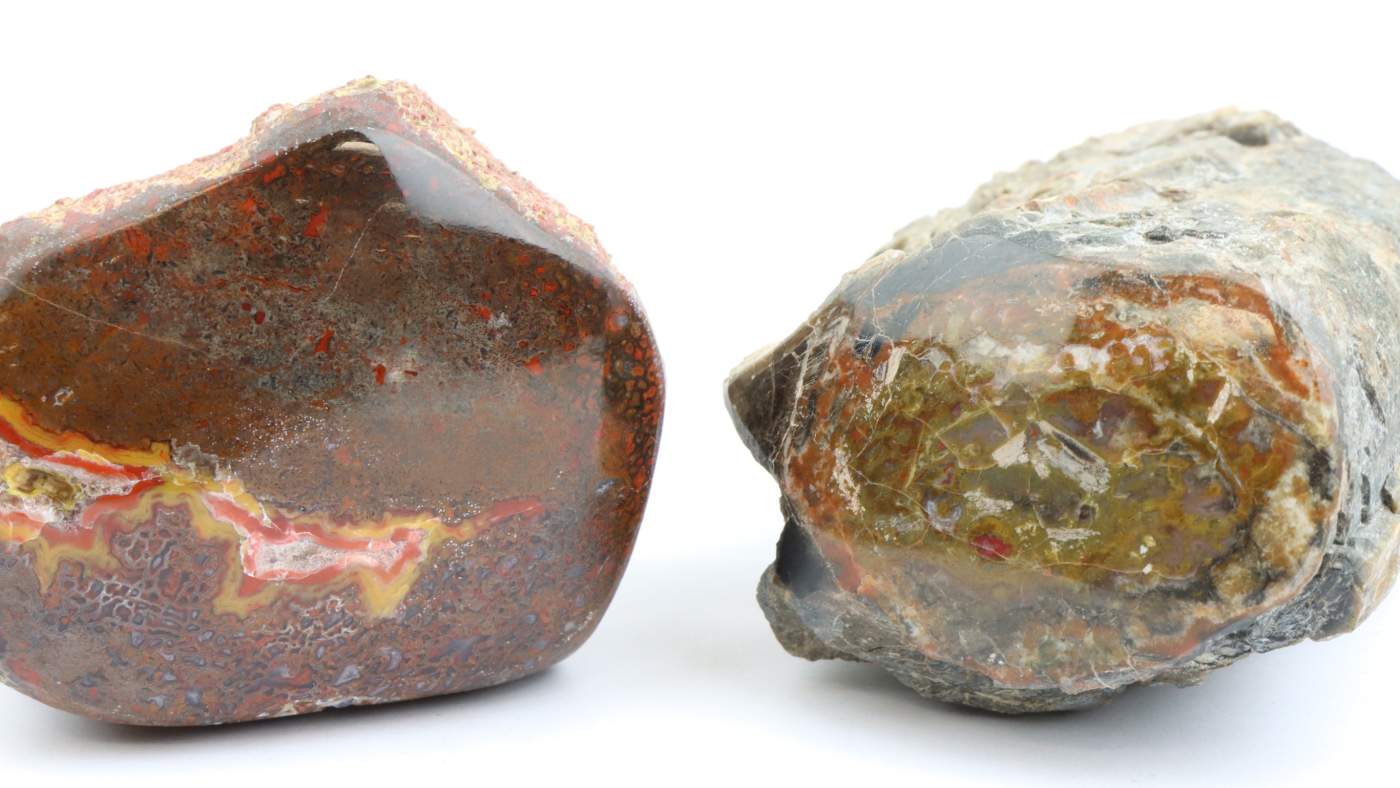
Dinosaur gembone occupies a rare space in the collecting world, one that defies simple categorization. It is at once fossil and gemstone, specimen and decorative material, scientific artifact and lapidary art. Formed when prehistoric bone is mineralized and agatized over millions of years, gembone preserves the cellular structure of dinosaur bone while displaying the color, translucency, and polish of fine chalcedony. This dual identity is precisely what makes it so compelling to collectors and why it continues to gain recognition in mineral, jewelry, and natural history markets alike.
For mineral enthusiasts, gembone is a silica-replaced fossil with geological significance. For fossil collectors, it is authentic dinosaur bone retaining original biological architecture. For lapidary artists and jewelry designers, it is a gemstone capable of taking a high polish and revealing intricate mosaic-like patterns. Few materials naturally bridge these domains so completely. As a result, dinosaur gembone appears across multiple collecting categories, including fossil bone, agatized bone, fossil cabochons, and dinosaur jewelry, expanding both its audience and market appeal.
From Living Bone to Gemstone
The transformation of dinosaur bone into gembone begins after burial, when groundwater rich in dissolved silica permeates porous bone tissue. Over time, the original organic material is replaced or infilled by microcrystalline quartz. Unlike many fossils that simply mineralize without decorative effect, agatized bone retains the microscopic cellular chambers of the original skeleton. These chambers become filled with chalcedony in varying colors, creating the distinctive honeycomb or webbed patterning that defines gembone.
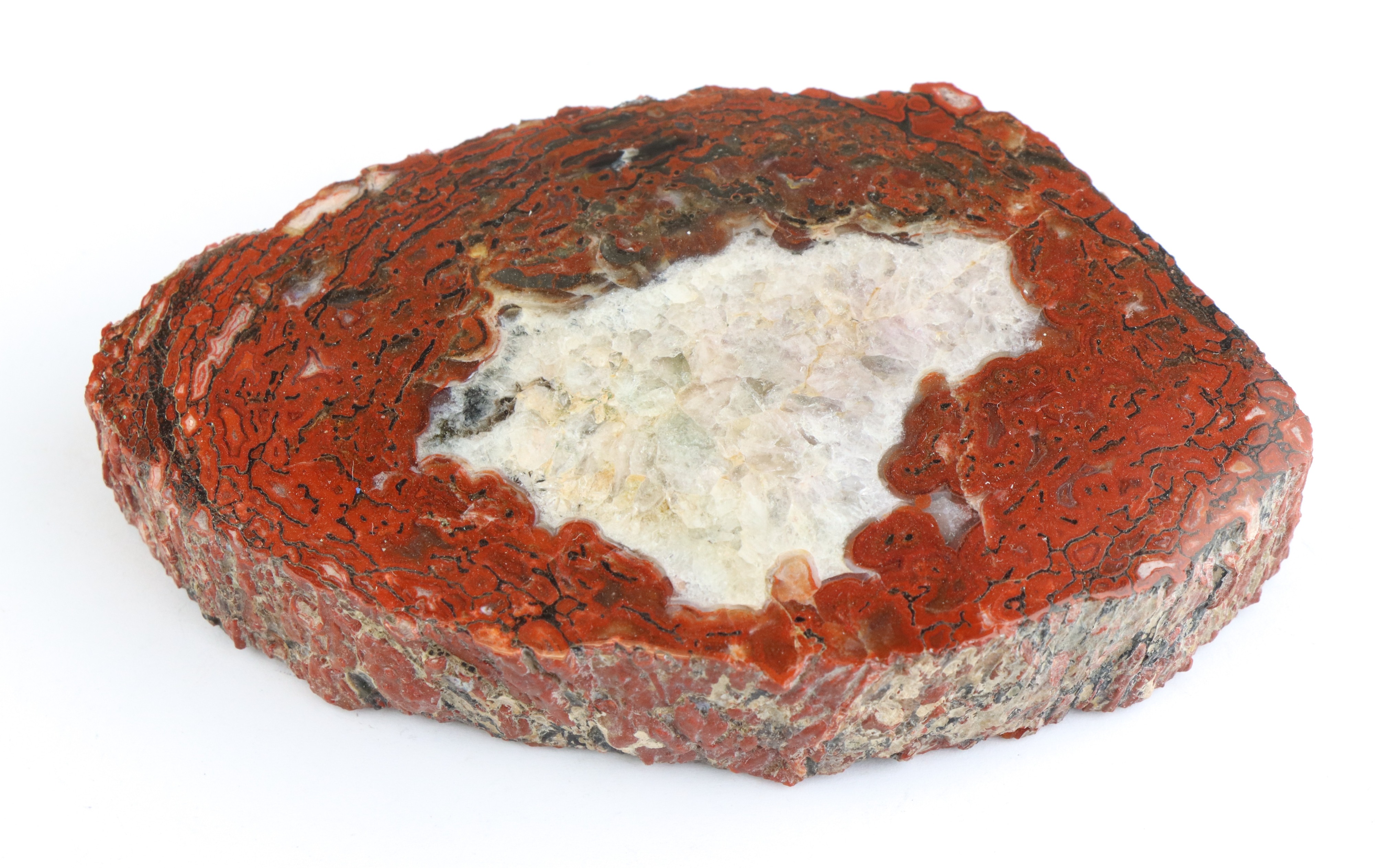
Trace elements present during mineralization influence coloration. Iron can produce reds and oranges, manganese may create pinks or purples, and carbon or other inclusions can yield blacks and browns. The resulting material ranges from subtle tonal mosaics to vividly multicolored patterns that rival turquoise matrix or opal play in visual complexity. When cut and polished, the preserved cell structure appears as geometric patches or tessellated networks, each piece uniquely determined by the anatomy of the original bone and the chemistry of fossilization.
Fossil Authenticity Meets Gem Quality
One of the most intriguing aspects of dinosaur gembone is that its aesthetic beauty arises directly from biological structure. The visible pattern is not incidental veining or fracture fill; it is the preserved architecture of dinosaur bone cells. This makes every polished cabochon or slab both a gemstone and a recognizable fragment of prehistoric anatomy. Unlike most gemstones, which are valued primarily for optical properties, gembone carries paleontological authenticity alongside decorative appeal.
Collectors often respond strongly to this combination. A polished gembone cabochon is not merely an ornamental stone but a fragment of a living organism that existed tens of millions of years ago. Yet it is also durable, workable, and suitable for jewelry or display. This dual identity encourages crossover collecting. Mineral buyers appreciate its silica replacement and color patterning, fossil collectors value its biological preservation, and jewelry enthusiasts are drawn to its distinctive appearance and narrative.
The Lapidary Transformation
Although gembone begins as fossilized bone, its visual potential is realized through lapidary cutting and polishing. Rough agatized bone often appears unremarkable externally. Only when cut does the internal cell structure emerge, revealing the mosaic patterns prized by collectors. Skilled lapidaries orient cuts to maximize pattern clarity, color contrast, and stability, producing cabochons, inlay pieces, beads, or display slabs.
The material’s chalcedonic composition allows it to take a fine polish comparable to agate or jasper. This finish enhances contrast between individual cells and accentuates translucency where present. In jewelry applications, gembone offers durability suitable for pendants, rings, or earrings, while retaining the unmistakable fossil pattern that distinguishes it from conventional gemstones. The lapidary process thus completes the transformation from prehistoric bone to finished gem without erasing its fossil identity.
A Material at the Intersection of Categories
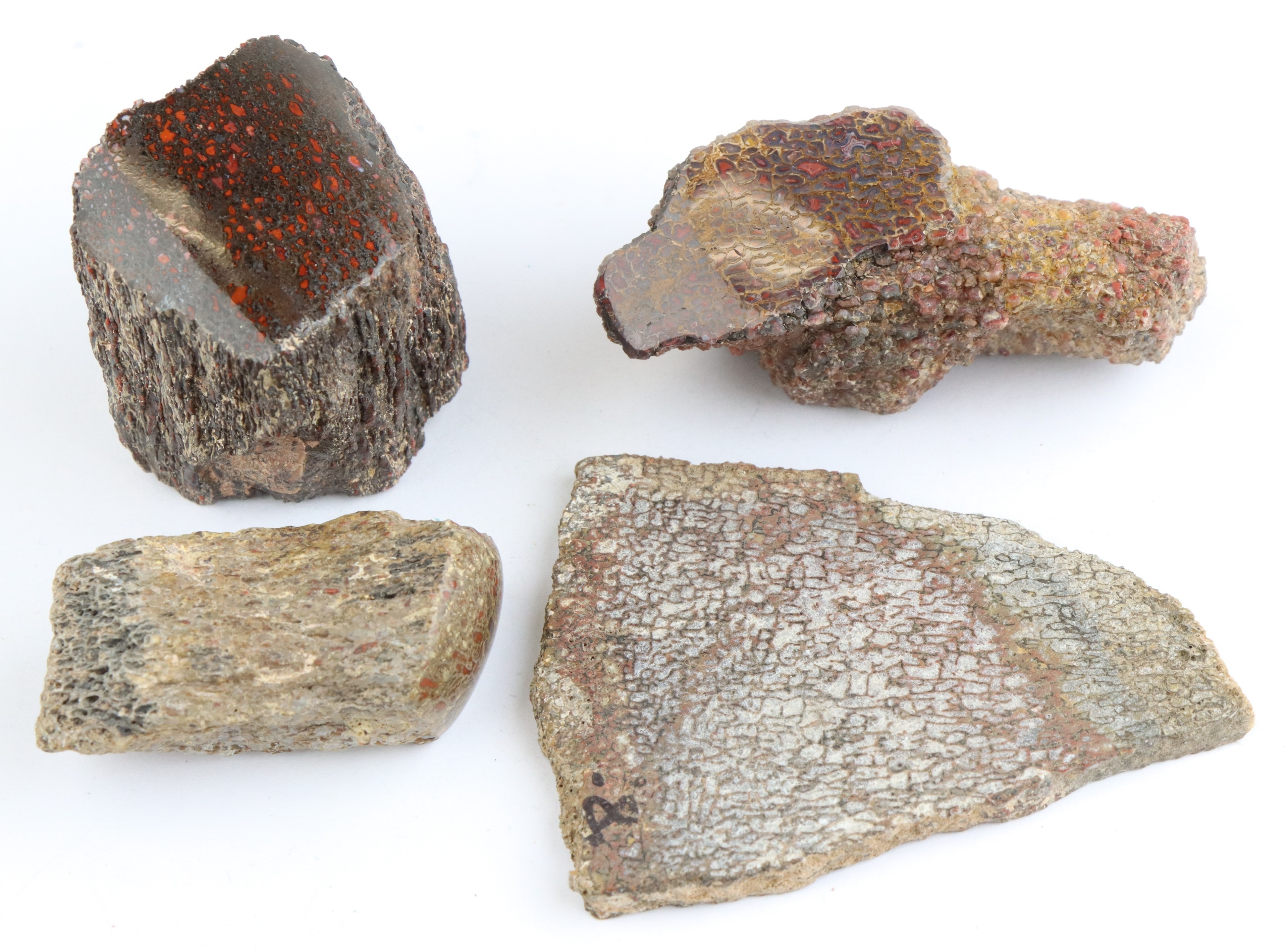
Because dinosaur gembone spans fossil, mineral, and lapidary domains, it appears in multiple collecting contexts. Natural history collections may include it as agatized dinosaur bone. Mineral collections classify it among silica-replaced fossils. Lapidary and jewelry markets treat it as a gemstone. Auction catalogues may reasonably list it under fossils, minerals, gemstones, or jewelry depending on form and presentation.
This fluid categorization broadens search visibility and buyer engagement. Terms such as fossil bone, agatized bone, dinosaur gemstone, fossil cabochon, and dinosaur jewelry all legitimately describe gembone. For collectors, this multiplicity is part of its appeal. It is simultaneously specimen and adornment, scientific and aesthetic, ancient and wearable. Few materials offer such layered identity.
Geological and Geographic Context
Most commercially recognized dinosaur gembone originates from the American West, particularly formations associated with Late Jurassic dinosaur remains. Over millions of years, burial, groundwater movement, and silica deposition produced agatized bone deposits in regions now known for fossil and mineral resources. While individual pieces may not always carry precise locality data, the general Western U.S. association contributes to the material’s natural history narrative and collecting context.
This geological setting also explains variation in color and preservation. Differences in groundwater chemistry, sediment composition, and fossilization conditions across regions produce distinct visual character in gembone. Some material shows tight, uniform cellular mosaics; other pieces display larger or more irregular cell patterns. Multicolor examples are comparatively scarce and especially sought after.
Evaluating Dinosaur Gembone
As both fossil and gemstone, gembone is assessed through criteria drawn from multiple disciplines. Collectors typically consider:
- Cell definition: Clear, intact cellular patterning is highly desirable.
- Color and contrast: Saturated or multicolored material commands attention.
- Stability: Absence of fractures or crumbly areas ensures durability.
- Polish quality: A high, even polish enhances visual depth.
- Pattern uniqueness: Distinctive mosaic or honeycomb structures increase appeal.
These qualities parallel gemstone evaluation while respecting fossil preservation. A piece that balances strong pattern, color, and structural integrity exemplifies the material’s hybrid nature.
Deep Time in Tangible Form
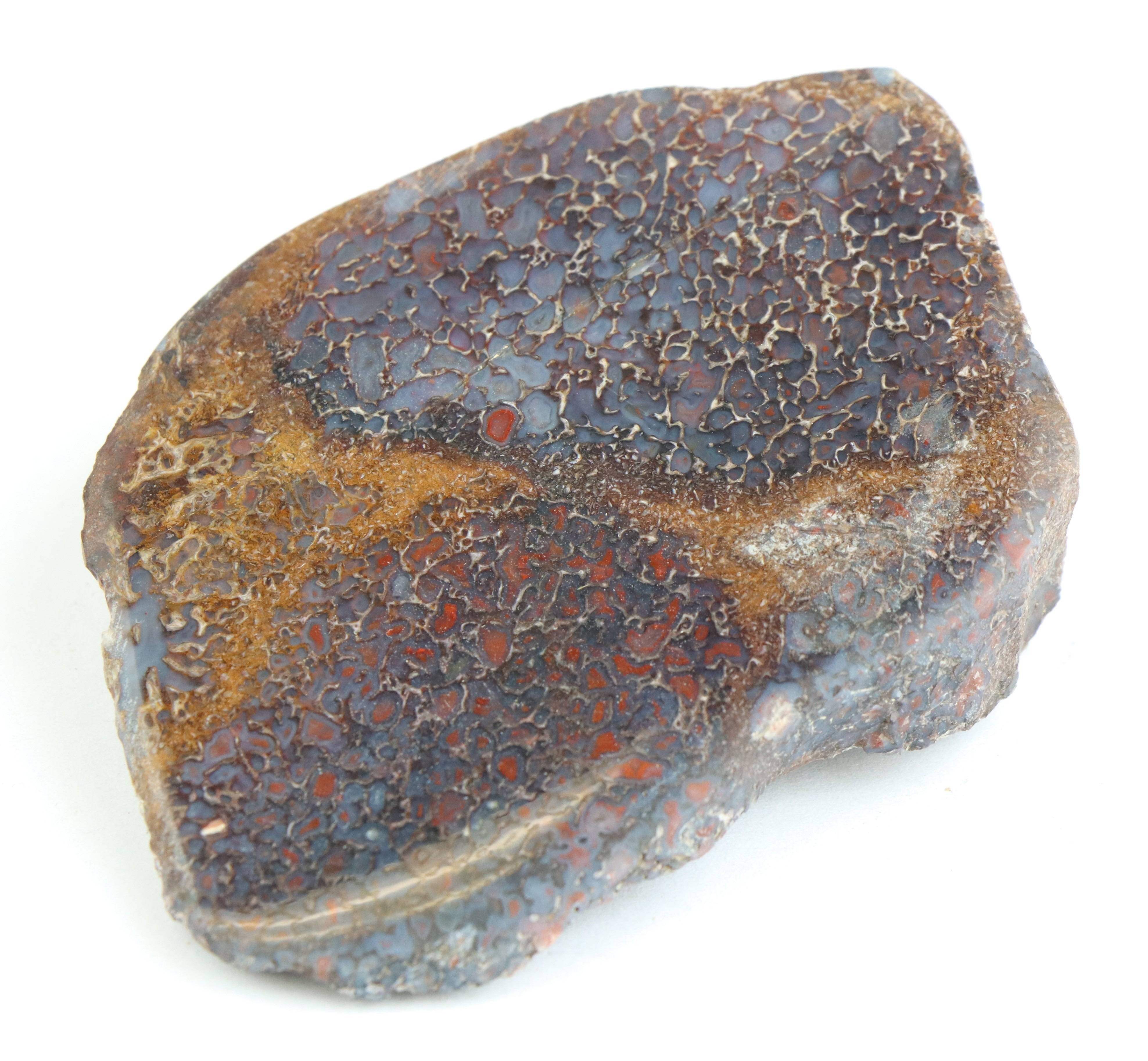
Perhaps the most compelling aspect of dinosaur gembone is temporal. The bone from which it derives formed within a living dinosaur tens to hundreds of millions of years ago. Its agatization occurred over geological timescales far beyond human experience. Yet the finished object can be held, worn, or displayed today. This compression of deep time into a tangible, polished form resonates strongly with collectors. Unlike many fossils displayed primarily for scientific interest, gembone invites aesthetic engagement. It allows ownership of prehistoric material that is both visually striking and physically durable. The result is a category that feels simultaneously ancient and immediate, scientific and decorative.
Dinosaur Gembone in the Mineral and Jewelry Market
As awareness grows, dinosaur gembone continues to gain traction across collecting communities. Mineral enthusiasts recognize it among silica-replaced fossils. Jewelry designers value its uniqueness and narrative. Fossil collectors appreciate preserved anatomy in finished form. Auction markets increasingly reflect this cross-disciplinary appeal, presenting gembone as fossil specimen, gemstone material, or completed jewelry depending on context. This expanding recognition underscores its position as a distinct collecting category rather than a curiosity within another field. Gembone exemplifies how natural materials can transcend conventional boundaries between science, geology, and decorative art.
Fossil and Gemstone, Unified
Dinosaur gembone ultimately resists a single label because it legitimately belongs to several. It is fossilized bone retaining biological structure. It is chalcedonic gemstone capable of polish and color. It is lapidary art shaped by human craftsmanship. Each identity enhances the others rather than competing with them. For collectors, this convergence is precisely the attraction. A piece of gembone can be understood scientifically, appreciated aesthetically, and worn or displayed materially. It embodies deep time while functioning as a finished gem. Few natural materials so completely merge fossil authenticity with gemstone beauty. In this intersection of fossil, mineral, and lapidary art, dinosaur gembone stands as a category uniquely its own.