
Nature’s Geometry: The Remarkable World of Pyrite Crystals
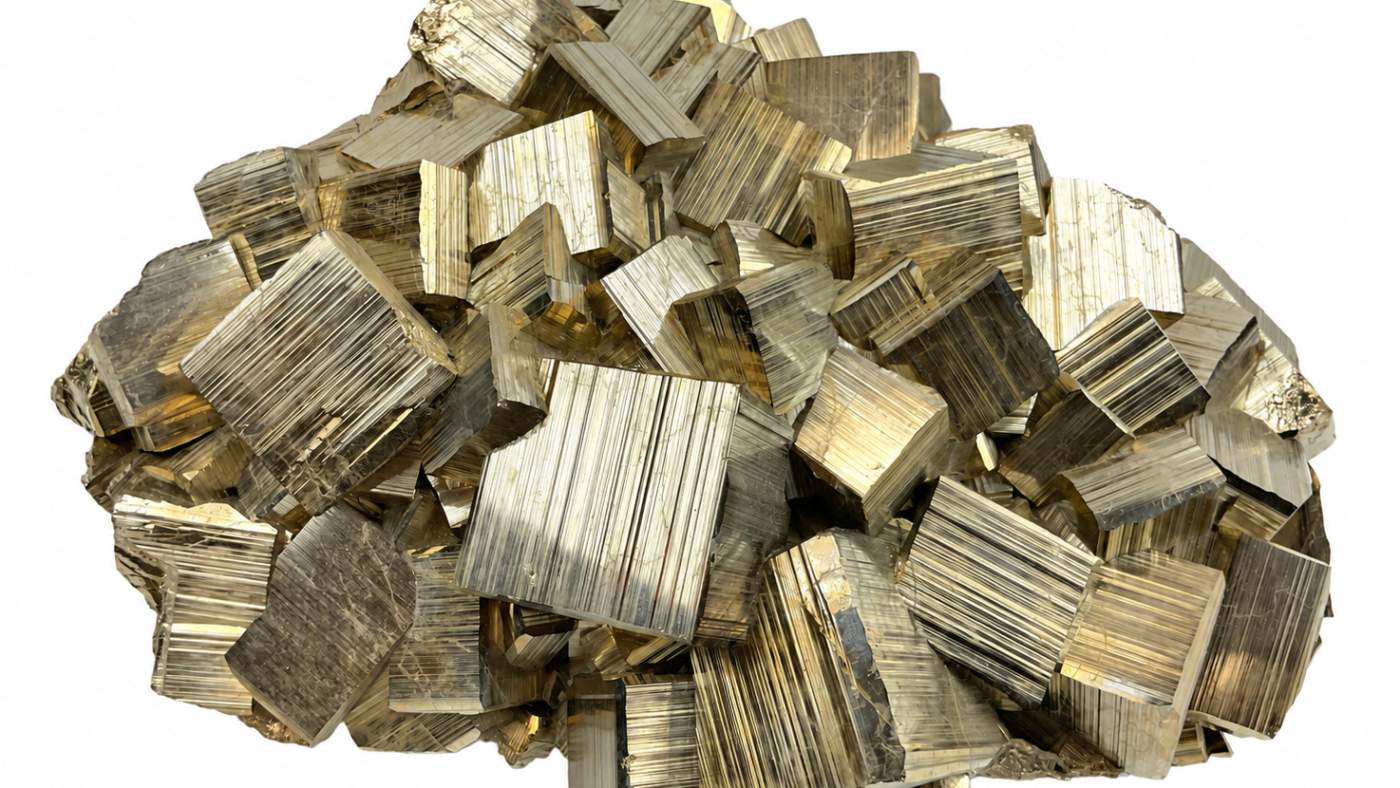
Nature's Geometry: The Remarkable World of Pyrite Crystals
Written by: Christian Answini | Senior Fine Art Specialist
At first glance, a perfect cube of golden pyrite looks almost too precise to be natural. Its flat faces, sharp edges, and metallic luster can resemble something carefully cut and polished by a craftsman. Yet some of the world's most striking pyrite crystals emerge from the earth with their geometric shapes already formed. Known for centuries as fool's gold, pyrite is far more interesting than its nickname suggests. Its natural geometry, brilliant metallic surfaces, and remarkable variety of crystal formations have made it a favorite among mineral collectors. From nearly perfect cubes found in Spain to intricate crystal clusters and unusual disk-shaped formations, pyrite demonstrates how nature creates order through chemistry and geology. Alderfer Auction's November 11 Mineral Auction features several examples of this fascinating mineral, offering an opportunity to explore what makes pyrite so appealing to collectors.
Pyrite Forms Remarkably Precise Natural Cubes
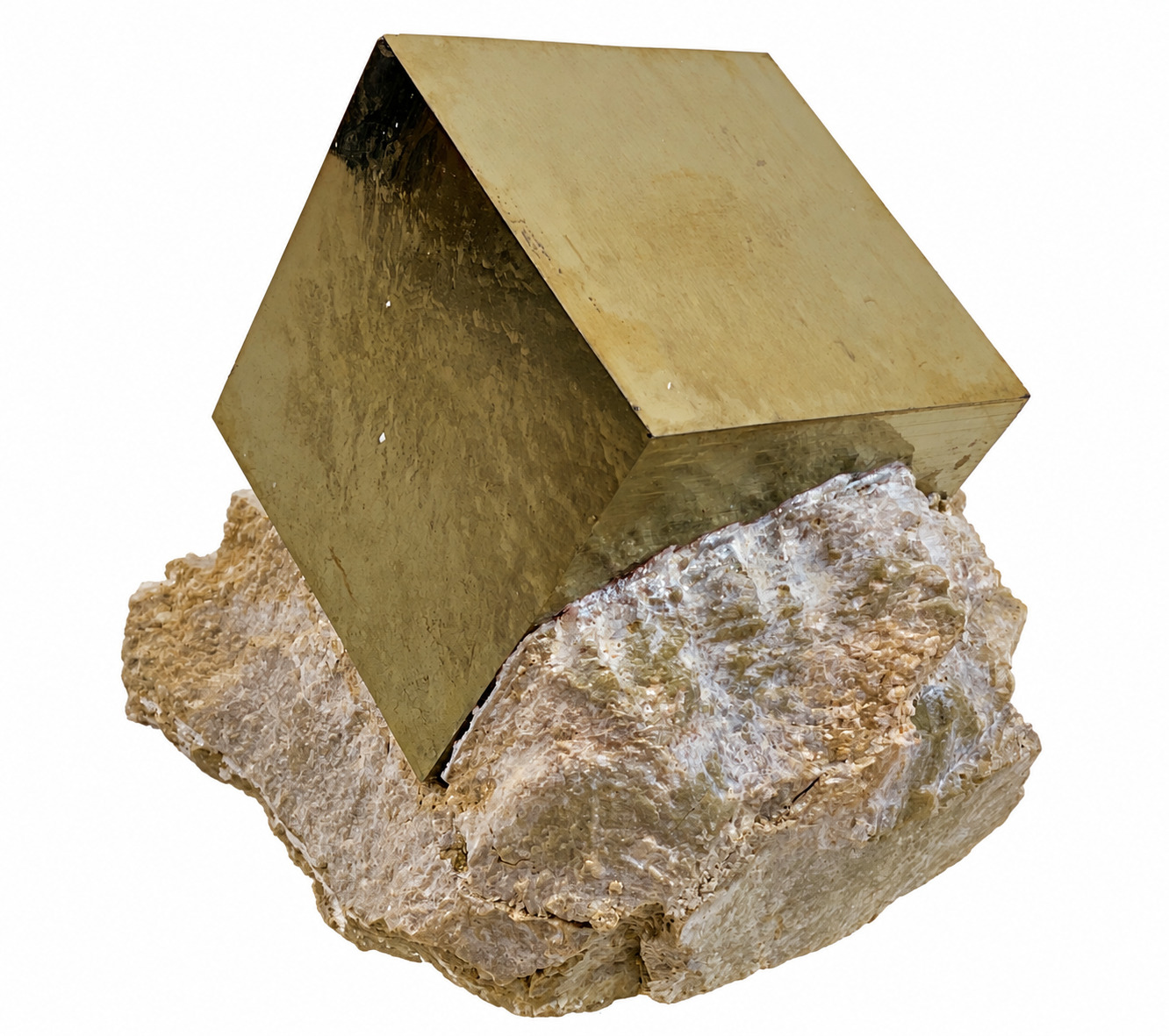
One of pyrite's most extraordinary characteristics is its ability to form almost perfectly geometric crystals. Pyrite is an iron sulfide mineral with the chemical formula FeS₂. Its internal atomic structure belongs to the cubic crystal system, allowing crystals to develop flat faces and sharply defined edges. The result can be astonishing. Some pyrite crystals look like tiny golden building blocks, with remarkably straight edges and smooth surfaces. Others form interlocking cubes or more complex shapes, including pyritohedrons with twelve faces. The Spanish locality of Navajún, La Rioja, is particularly celebrated for its naturally formed cubic pyrite crystals. These specimens have become iconic among mineral collectors because their geometry can appear almost manufactured. But those straight edges aren't the result of cutting or polishing. They are a natural expression of the mineral's crystal structure.
No Two Pyrite Crystal Clusters Are Exactly Alike
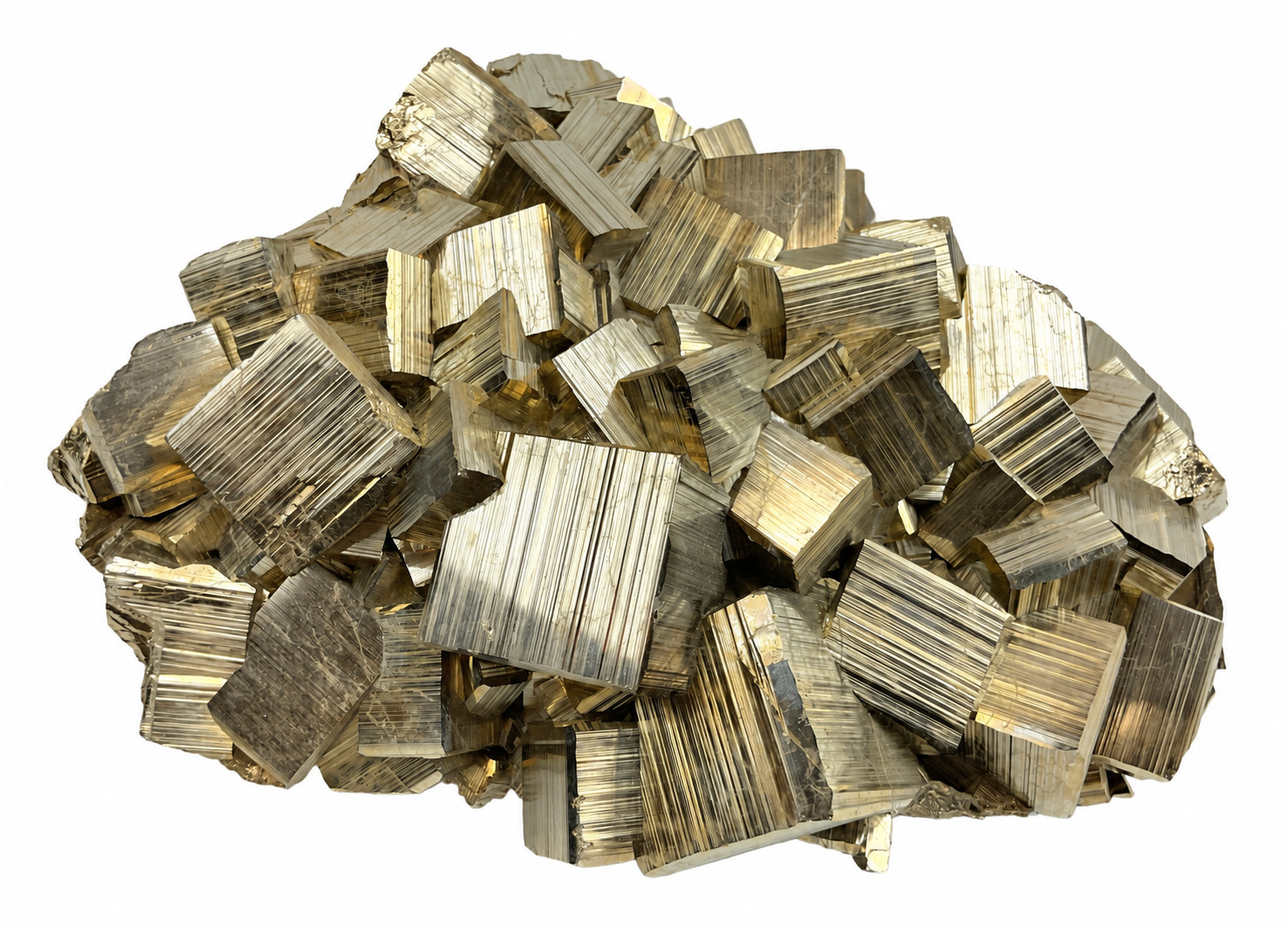
Although a single cubic crystal can be beautiful, pyrite becomes especially interesting when multiple crystals grow together. A crystal cluster may contain dozens of individual forms, each reflecting light in a slightly different direction. Some crystals intersect. Others appear stacked or partially embedded in surrounding material. The result is a miniature architectural landscape. These formations develop as mineral-rich fluids and geological conditions allow crystals to grow over time. Differences in available space, temperature, chemistry, and growth conditions can influence the resulting arrangement. For collectors, that means two specimens of the same mineral can have completely different visual personalities. One might be prized for a nearly flawless cube. Another might be admired for its dramatic cluster, unusual crystal relationships, or contrasting matrix. In both cases, the appeal comes from the natural formation rather than from human design.
Pyrite Doesn't Always Form Cubes
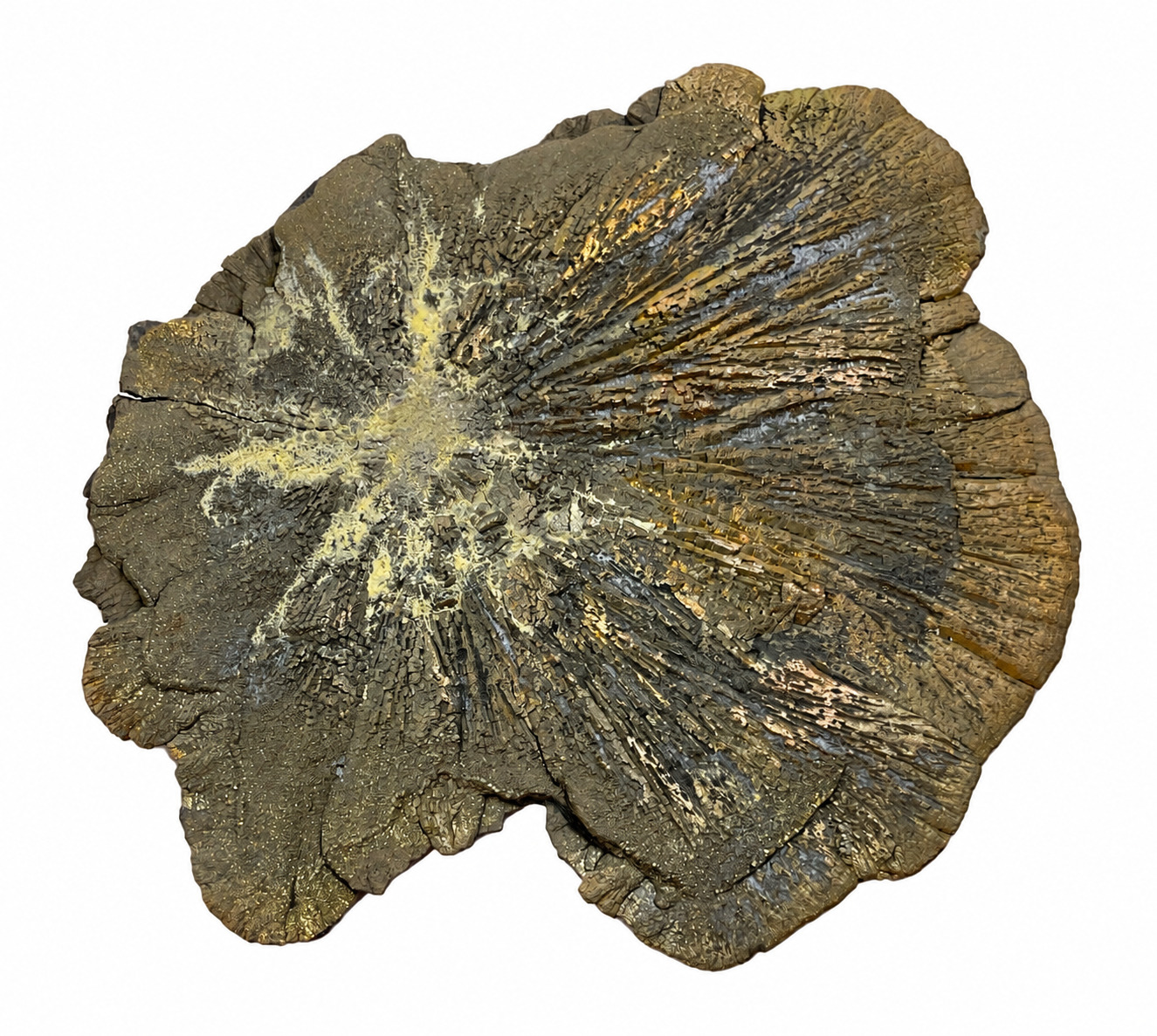
Not all pyrite specimens resemble golden blocks. One of the mineral's more unusual forms is the pyrite sun, sometimes called a pyrite dollar. These flattened, disk-like formations display radiating lines that extend outward from their centers, creating an appearance reminiscent of sunlight. Pyrite suns are especially associated with certain sedimentary rock formations, where growth under confined conditions contributes to their unusual shapes. The November 11 auction includes a pyrite sun with radiating fibrous striations, offered alongside a pyritized ammonite. The ammonite introduces another fascinating geological process: pyritization, in which pyrite can replace or fill portions of an organism's remains during fossilization. Under suitable conditions, the result preserves aspects of an ancient organism in a metallic mineral. Together, these specimens demonstrate how pyrite can appear in dramatically different forms, from precise geometric crystals to radiating disks and mineralized fossils.
What Makes a Pyrite Specimen Collectible?
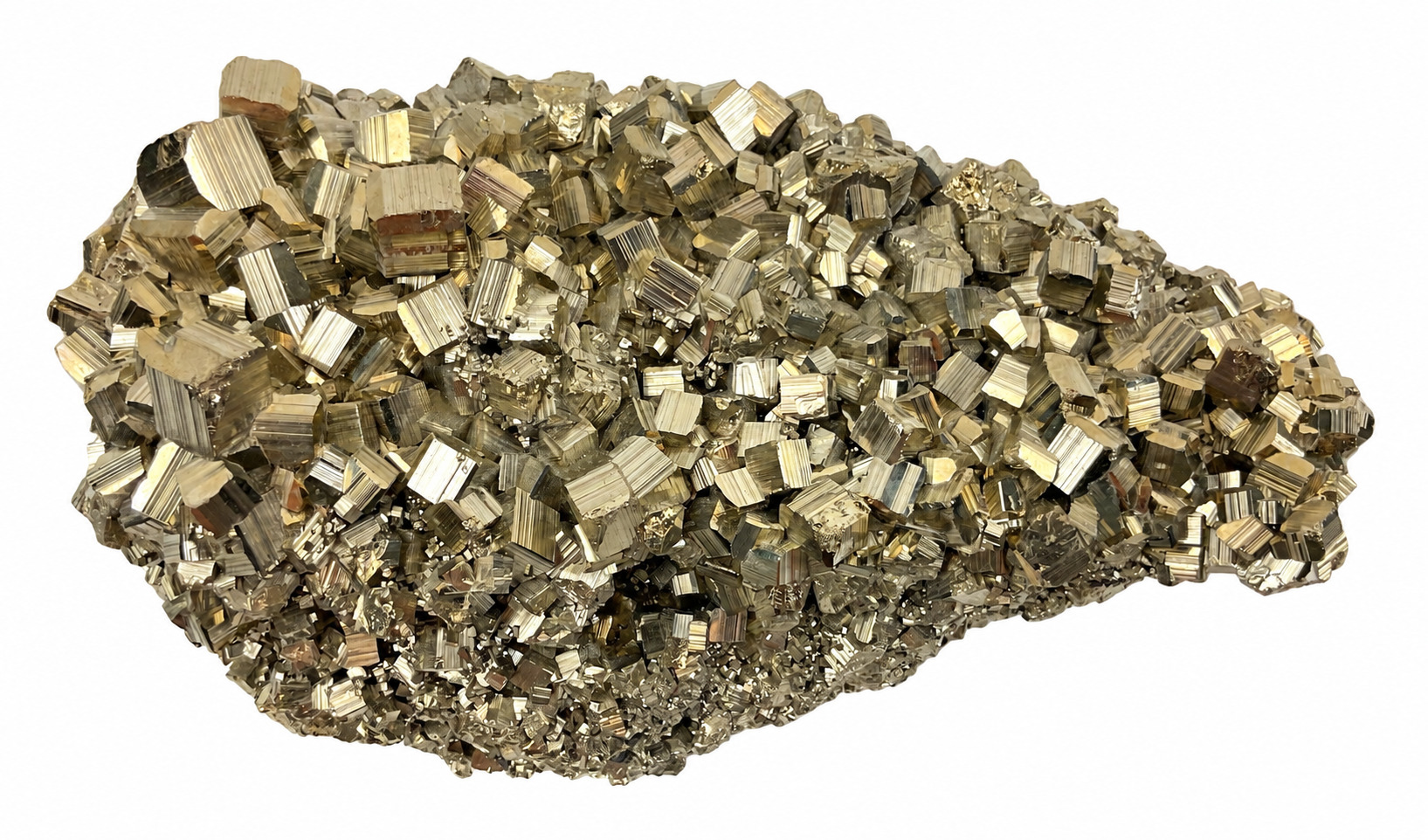
Pyrite is relatively common, but that doesn't mean every specimen is equally desirable to collectors. Several characteristics can influence a specimen's appeal. Crystal form and definition are important. Well-developed crystals with clearly defined faces and edges can be especially attractive, particularly when the specimen displays an unusual arrangement. Luster also matters. Pyrite's metallic surfaces can reflect light dramatically, making bright, well-preserved crystals particularly appealing. Condition deserves careful attention. Chipped corners, broken crystals, surface alterations, and evidence of instability may affect a specimen's desirability. Some pyrite specimens are also susceptible to deterioration under unfavorable environmental conditions, making appropriate storage important. Size and presentation can contribute to collector interest. A large cluster may create an impressive display, while a smaller, exceptionally formed crystal can be equally compelling. Finally, locality matters. Certain mines and regions have become celebrated for producing distinctive mineral specimens. Navajún, Spain, and Cerro de Pasco, Peru, are two examples represented in Alderfer's November 11 auction. The best specimens often combine several of these qualities rather than relying on size or rarity alone.
Collecting Pyrite at Auction
Mineral auctions offer collectors an opportunity to encounter specimens from different geological regions, crystal habits, and collecting traditions in one place. Alderfer's November 11 Mineral Auction includes a selection of pyrite ranging from individual cubic crystals and larger clusters to unusual formations such as the pyrite sun. For established collectors, these specimens may complement an existing mineral collection or represent a particular locality of interest. For newcomers, pyrite can provide an accessible introduction to mineral collecting because its geometry and metallic appearance are so immediately recognizable. Before bidding, collectors should review the catalog photographs, descriptions, dimensions, weights, locality information, and any available condition details. It is also important to consider how a specimen will be displayed and stored. Pyrite is best kept in a stable, dry environment, since some specimens can deteriorate when exposed to moisture and unfavorable storage conditions.