
A Legacy Cast in Silver: Tiffany’s Role in American Artistry

A Legacy Cast in Silver: Tiffany’s Role in American Artistry
Edited by: Christian Answini | Fine Arts Department
When we think of American art, our minds often drift toward paintings of vast landscapes or the warm glow of Shaker furniture. Yet, the brilliance of American artistry gleams just as brightly in silver. Few names embody this spirit as enduringly as Tiffany & Co., whose designs helped define what “American style” meant in fine silver. As the nation prepares to celebrate its 250th birthday, Tiffany’s work stands as a glittering symbol of innovation, craftsmanship, and national identity. From the Gilded Age to today, its designers have woven artistry, technology, and cultural pride into sterling creations that are as functional as they are breathtaking.
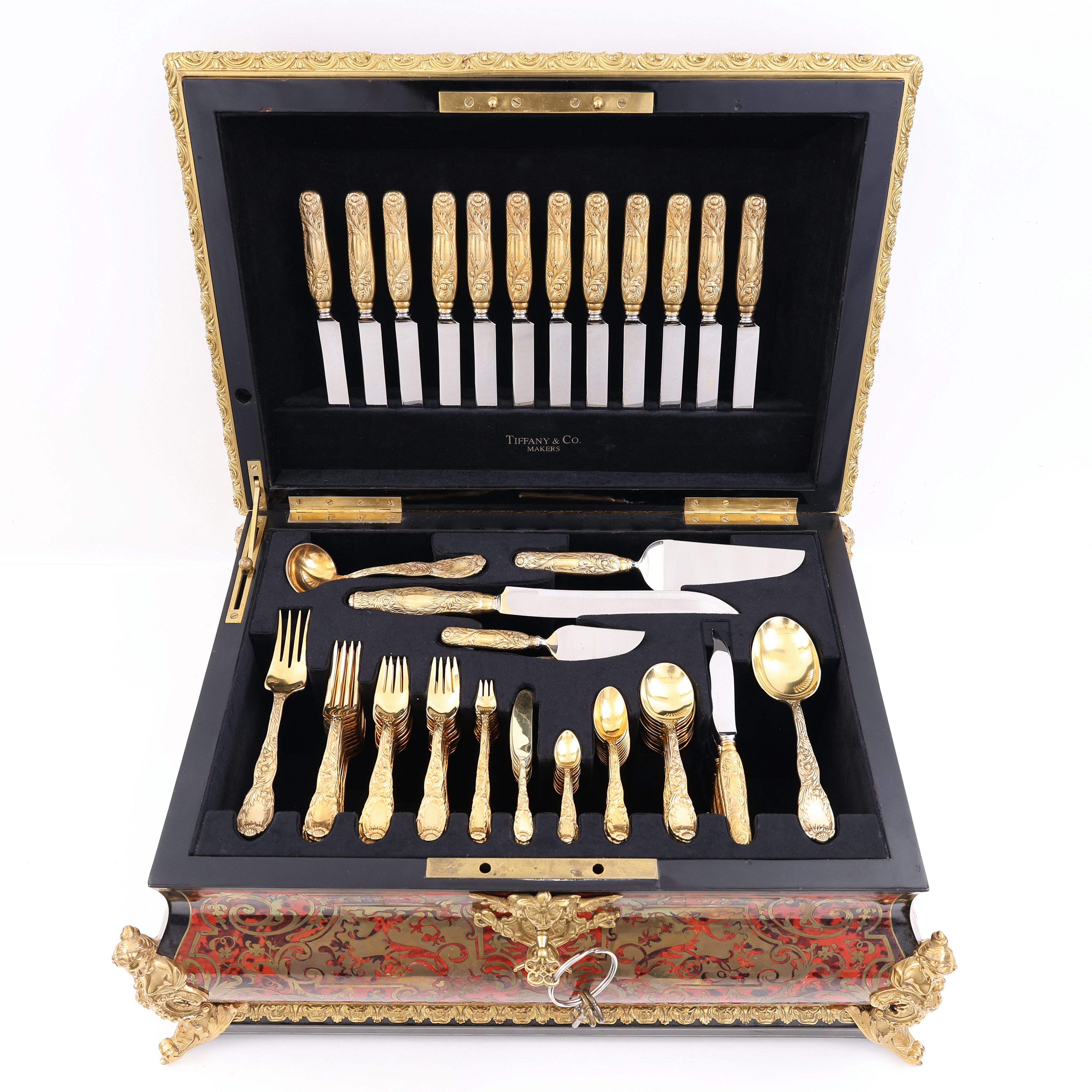
This March, our Fine Arts Auction on March 19th will celebrate this very legacy with exquisite sterling works that embody the essence of American creativity—including two remarkable Tiffany flatware sets in the Chrysanthemum Vermeil and San Lorenzo patterns, alongside an Aesthetic Movement sterling tea and coffee service that recalls the golden age of silver design.
Charles Lewis Tiffany and Edward C. Moore: The Visionaries Who Made Silver an Art Form
Before Edward C. Moore ever put chisel to silver, the vision began with Charles Lewis Tiffany, the founder of Tiffany & Co.. Established in 1837, Tiffany’s firm began as a stationery and “fancy goods” store in New York City, but Charles Lewis Tiffany quickly distinguished himself through an unwavering commitment to quality and innovation. Known as the “King of Diamonds,” he set strict standards for craftsmanship and helped popularize the sterling silver standard in America in 1851. His insistence on excellence laid the foundation for what would become the defining hallmark of Tiffany design: artistry rooted in integrity. More than a merchant, he was a cultural architect—shaping American taste during a time when the young nation was still defining its artistic identity. Without his bold leadership and belief that American goods could rival Europe’s finest, Tiffany silver might never have achieved its lasting place in the story of American art. No discussion of Tiffany’s silver artistry can begin without Edward C. Moore, the creative force who transformed the company’s silversmithing in the late 19th century.
Appointed as Tiffany’s chief designer in 1868, Moore brought a sculptural, painterly vision to the craft. His fascination with global influences—from Islamic metalwork to Japanese motifs—expanded Tiffany’s visual vocabulary far beyond European traditions. Under his leadership, Tiffany silver transcended its utilitarian roots, becoming an artistic statement of American refinement and curiosity. Moore’s influence culminated in Tiffany’s triumph at the 1878 Paris Exposition, where the firm’s silverwork astonished international audiences. These designs weren’t mere imitations of European luxury—they were declarations of an independent American aesthetic. In Moore’s hands, silver became a mirror for the nation’s growing confidence—a belief that America could rival any European power in artistry and craftsmanship.
.jpg)
The Aesthetic Movement and the Language of Beauty
The late 19th century saw the rise of the Aesthetic Movement, a period that celebrated art for art’s sake. Tiffany’s silver designs during this era, guided by Moore and his contemporaries, embraced beauty, nature, and asymmetry as guiding principles. Their creations often featured naturalistic motifs—sunflowers, chrysanthemums, birds, and flowing water—rendered with exquisite detail. This was silver not meant to merely adorn a table but to spark emotion and reflection.
The Aesthetic Movement sterling tea and coffee service offered in our upcoming auction captures this spirit perfectly. Its fine hand-engraving, fluid lines, and sculptural forms speak to a time when every household object could be a work of art—a philosophy deeply rooted in Tiffany’s design ethos. These pieces remind us that American artistry wasn’t confined to the canvas or the workshop; it thrived in the dining rooms of the Gilded Age, gleaming beneath gaslight.
Sterling Silver and the American Story
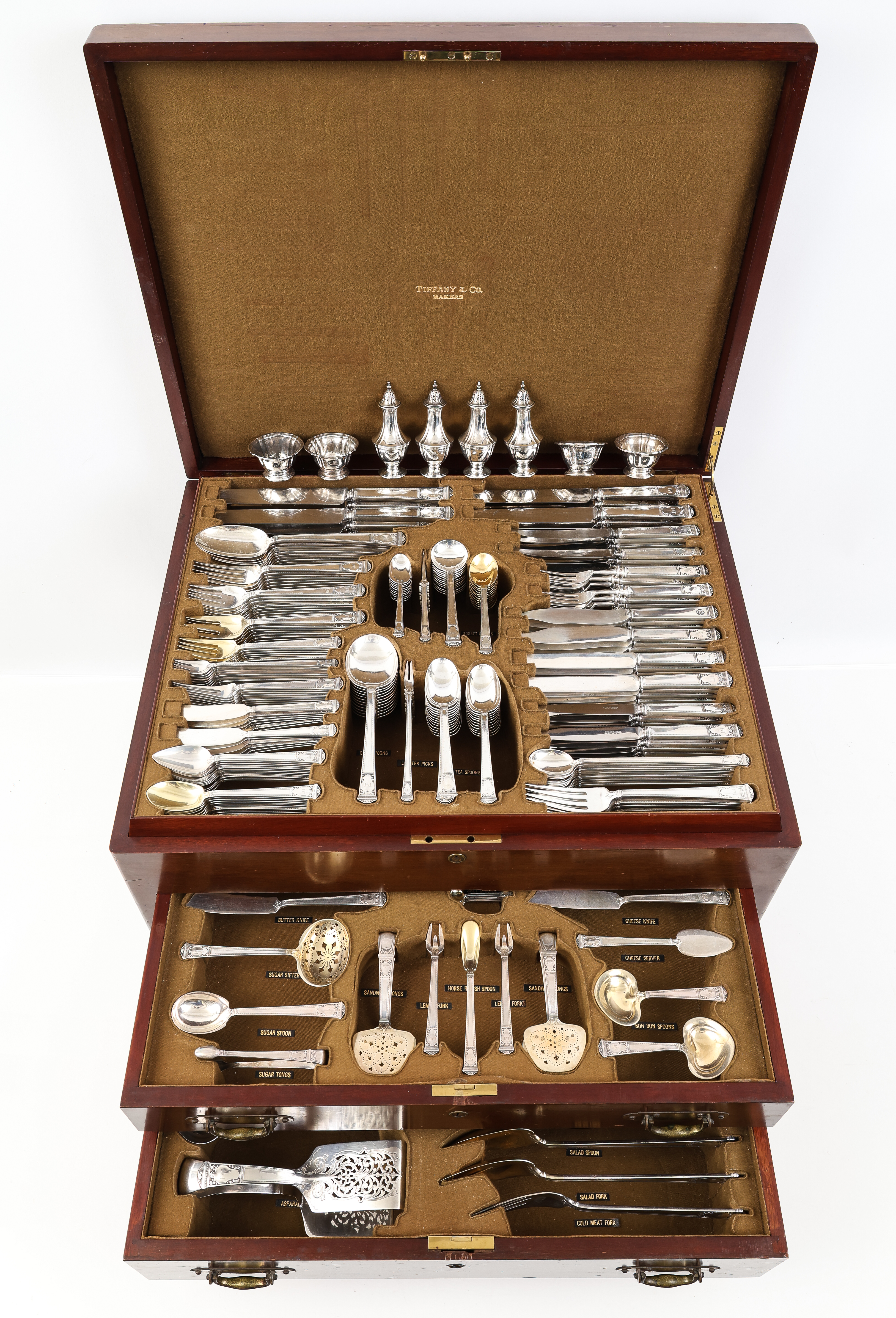
Tiffany’s mastery of sterling silver—a standard of 92.5% pure silver—was more than a technical achievement; it was a defining moment in American decorative arts. In 1851, Charles Lewis Tiffany made the bold decision to adopt sterling silver as the company’s official standard, at a time when American silversmiths were still largely producing coin silver of varying purity. This move was visionary. By aligning Tiffany’s production with the highest European standards—and insisting upon consistent quality—Charles elevated American silver to international credibility. He didn’t simply follow a trend; he helped set a new national benchmark. From that moment forward, sterling became synonymous with refinement, durability, and trust.
In many ways, this shift mirrored the nation’s own ambitions. Just as America was stepping confidently onto the world stage, Tiffany declared that American craftsmanship could equal—and even surpass—its European counterparts. Sterling silver became both a material and a metaphor: strong, resilient, and unmistakably American. The Chrysanthemum Vermeil flatware set and San Lorenzo pattern exemplify this fusion of artistry and identity.
The Chrysanthemum pattern, introduced in 1880, radiates opulence with its lavish floral motifs and luminous vermeil finish, embodying the exuberance of the Gilded Age.
The San Lorenzo pattern, with its architectural clarity and balanced ornamentation, reflects the disciplined elegance of the American Renaissance.
Each set offered in our March 19th Fine Arts Auction stands as proof of Charles Tiffany’s enduring legacy. His insistence on sterling did more than standardize silver—it helped define American luxury itself.
From Table to Museum: The Enduring Influence of Tiffany Silver
Today, Tiffany’s silver designs are celebrated in museums like The Metropolitan Museum of Art and The Smithsonian Institution, where their craftsmanship continues to inspire modern artists and collectors alike. Edward C. Moore’s design archives, now part of these institutions’ collections, continue to influence silversmiths, designers, and historians. His belief that beauty could be found in utility laid the foundation for what would become an enduring American design philosophy. This lineage—from Tiffany’s workshops to museum halls—underscores that silver, in the right hands, transcends function. It becomes a reflection of who we are as a people: inventive, expressive, and forever in pursuit of excellence.
Celebrating 250 Years of American Artistry in Silver
As we mark America’s 250th year, we look not only to paintings and monuments but to the artistry that shaped daily life. Tiffany’s silver, guided by visionaries like Edward C. Moore, stands as a shimmering thread in the tapestry of American creativity.
From the Aesthetic Movement’s poetic beauty to the timeless grace of the Chrysanthemum and San Lorenzo patterns, each piece tells a story of ambition, artistry, and national pride. Join us on March 19th for our Fine Arts Auction, where these masterpieces of American design will shine once more—a tribute to 250 years of artistry, craftsmanship, and the enduring brilliance of Tiffany silver.