
Imperial Tribute Fan from Guangzhou: A Qianlong Court Masterpiece at Auction
Imperial Tribute Fan from Guangzhou: A Qianlong Court Masterpiece at Auction
Edited by: Christian Answini | Fine Art Department
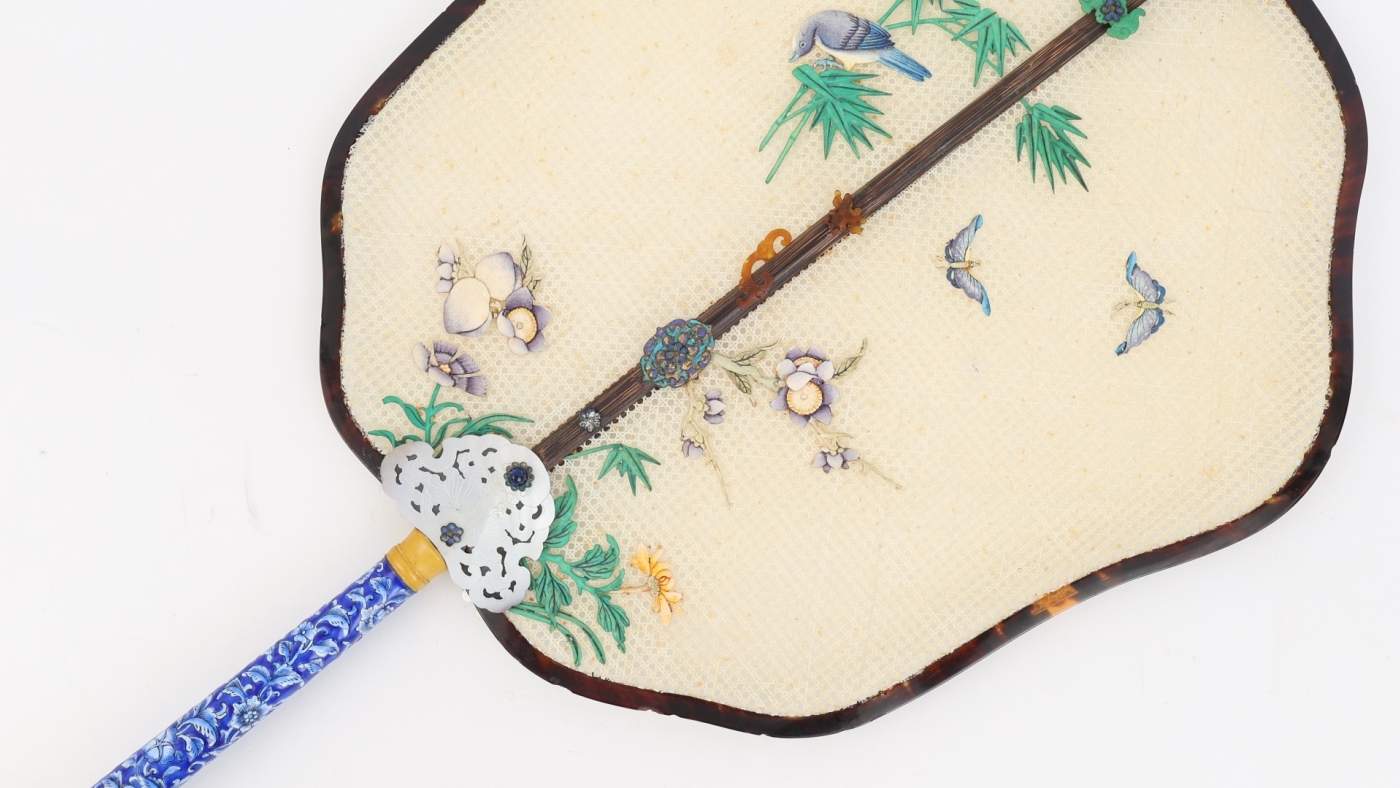
A rare Qing dynasty imperial tribute fan from the Qianlong period (1736–1795), produced in the renowned Guangzhou workshops, will be offered in Alderfer Auction’s upcoming Fine and Decorative Arts sale on March 19, 2026. This remarkable ivory and tortoiseshell fan represents the apex of 18th-century Cantonese craftsmanship made expressly for the Qing court. It is one of only a handful of such court-quality fans known to survive today, with most remaining examples preserved in institutional collections like the Palace Museum in Beijing[1][2]. Historically created as tribute gifts for the Emperor, the fan is a documented masterpiece that epitomizes the luxury objects presented to the Qianlong court. Its appearance at auction provides scholars and collectors a rare opportunity to examine an imperial object of this caliber outside a museum setting.
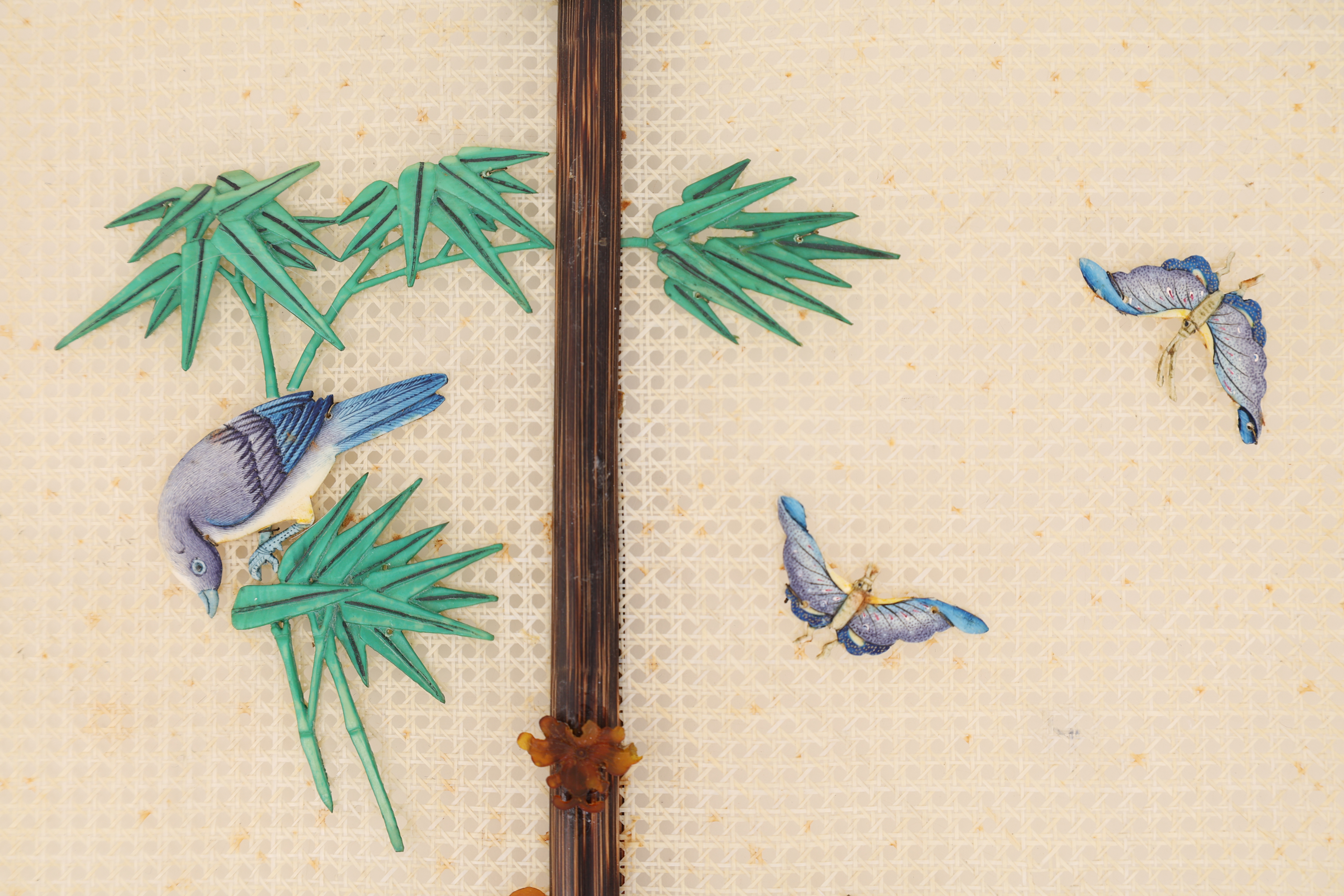
In terms of modern provenance, this fan was previously offered at Sotheby’s New York on March 23, 2010, as part of an Asia Week auction of Fine Chinese Ceramics & Works of Art. Catalogued at that time as an “Imperial Tribute Guangzhou Ivory and Tortoiseshell Fan”, it was described in detail for its exceptional quality and complete state of preservation. Sotheby’s noted the fan’s delicately plaited ivory caning fitted into a tortoiseshell frame and embellished with lavish materials such as stained ivory, mother-of-pearl, and iridescent kingfisher feather inlays[3]. The applied ornamentation forms a lively scene of magpies perched among bamboo stalks with butterflies in flight – a design rich in auspicious symbolism for happiness and longevity[4]. At the 2010 sale the fan carried an estimate of $100,000–150,000, underscoring its significance as a genuine court art object from the Qianlong period. This detailed modern catalog entry cemented the fan’s reputation as an authentic gongpin (tribute item) of the Qing court and provided a valuable scholarly record of its construction and motif.
Exquisite Guangzhou Craftsmanship in Ivory and Tortoiseshell
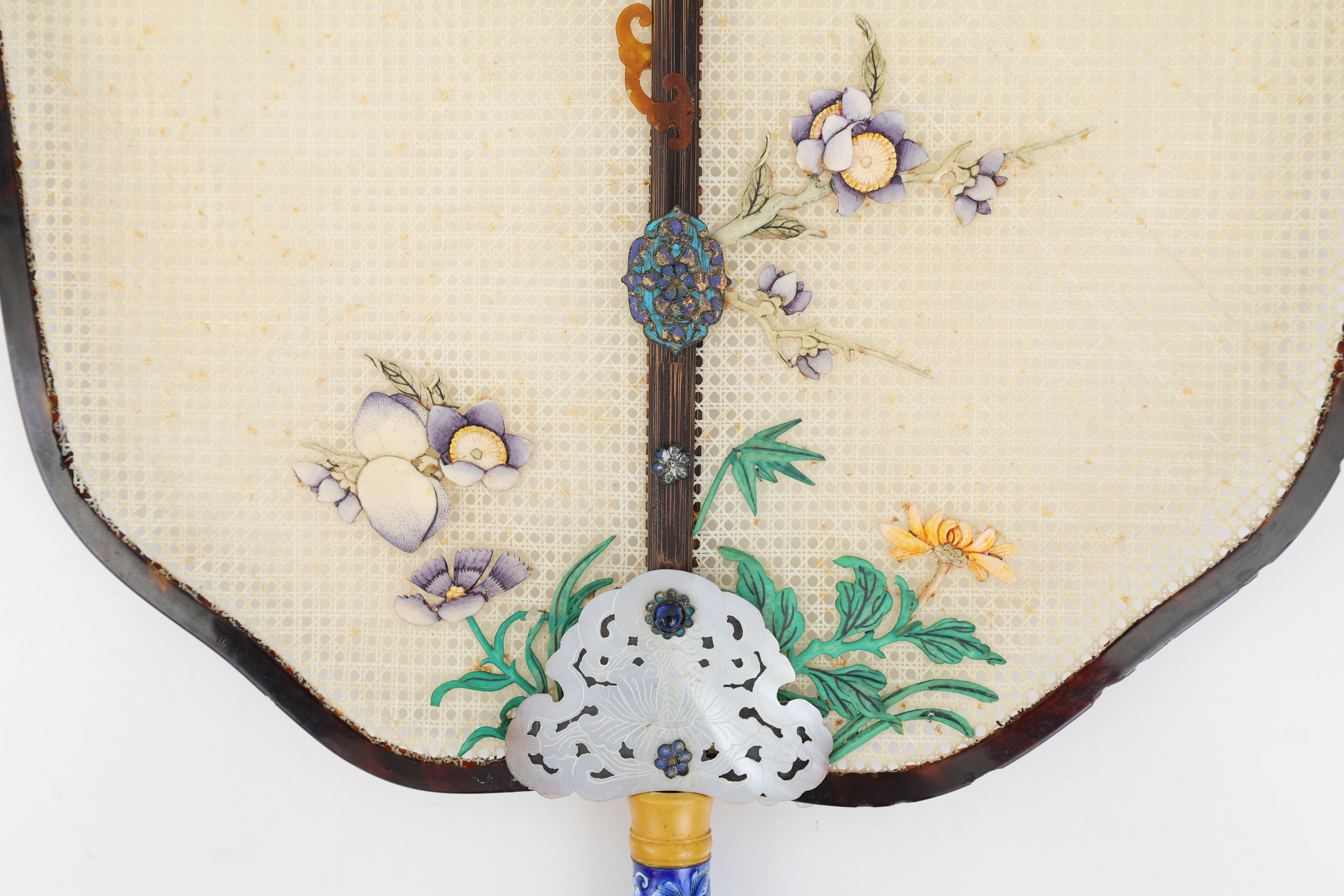
The fan itself is a marvel of technical virtuosity and intricate design. Its broad leaf is composed of extremely thin ivory slivers that have been meticulously plaited (woven) into a filigree lattice, creating a translucent yet sturdy fan surface[5]. This delicate ivory mesh is mounted within a gilded tortoiseshell frame that forms the outer sticks, providing both structural support and a rich visual contrast to the ivory. Down the middle of the fan leaf, a slender bamboo spine on each side reinforces the plaited ivory and is secured at the top by a ruyi-shaped gilt metal mount. This ruyi-head fitting—evoking the auspicious shape of a ceremonial scepter—doubles as the fan’s clasp and is artfully inlaid with vibrant kingfisher feathers, a luxury material prized in Qing decorative arts[5].
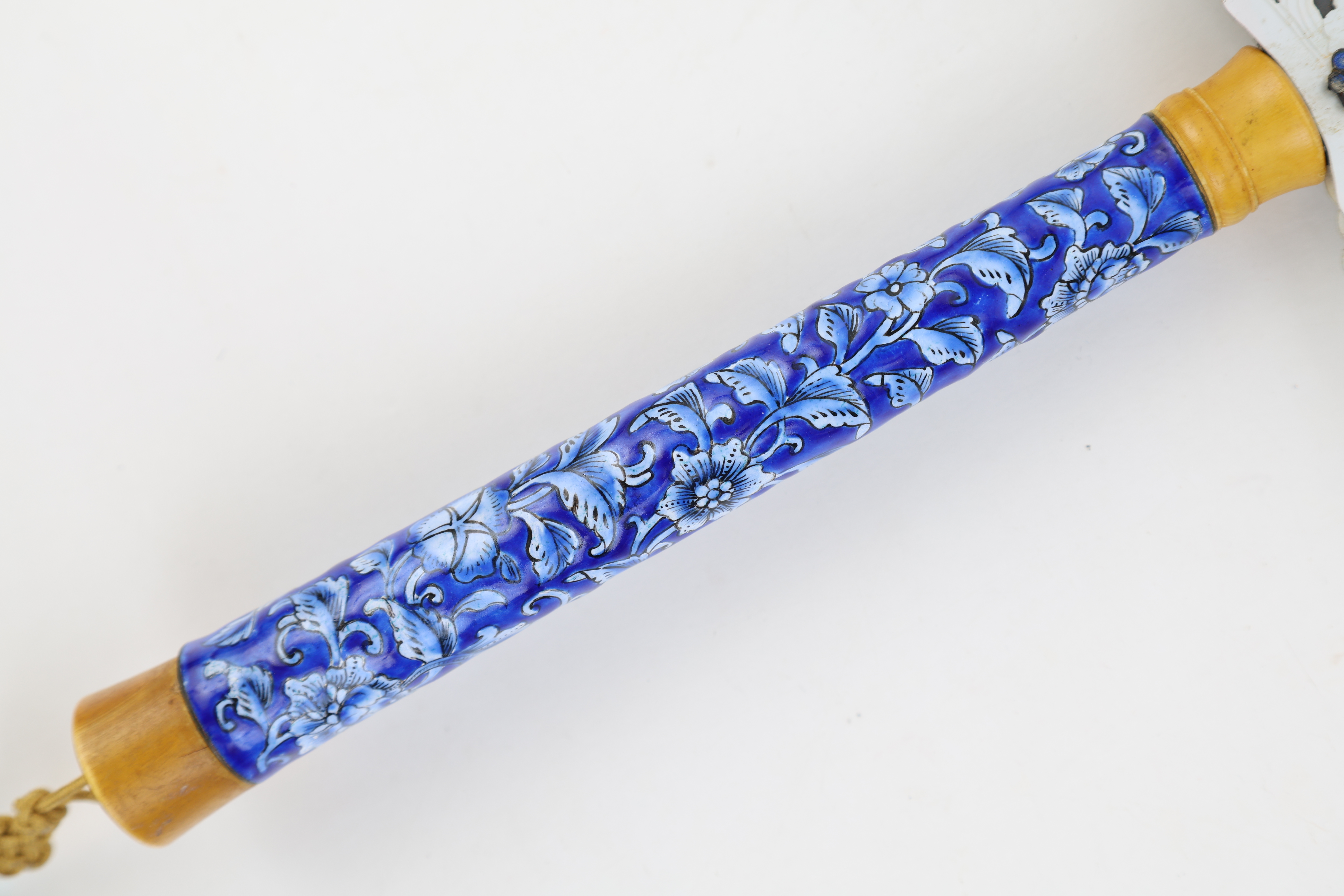
Every element of the fan is embellished with imperial symbolism and fine detail. Scattered across the ivory ground are tiny painted ivory appliqués carved in the forms of birds, flowers, and auspicious emblems. These polychrome ivory miniatures are affixed to the fan’s woven surface to create a scenic tableau (on this fan, a composition of magpies in a bamboo grove with butterflies and other flora)[6]. A carved mother-of-pearl plaque, shaped like a lotus blossom, ornaments the lower center of the fan leaf, adding a lustrous iridescence to the design. Completing the opulent ensemble, the fan’s handle is a work of art in its own right: the tortoiseshell frame extends into a sturdy handle section that is sheathed in painted enamel. Rendered in fine blue grisaille enamels, the handle features scrolling foliate motifs between ivory mounts, and terminates in a pierced gilt end fitting intended to hold a silk tassel[7]. This sophisticated combination of carved ivory, tortoiseshell, exotic feathers, mother-of-pearl, enamel work, and precious metals exemplifies the extravagant multi-media craftsmanship for which Guangzhou’s tribute workshops were renowned.
Guangzhou Tribute Workshops in the Yongzheng–Qianlong Era
The existence of this fan is closely tied to the system of imperial tribute that flourished under the Yongzheng and Qianlong emperors. Guangzhou (Canton) was the Qing Empire’s southern gateway for foreign trade and exotic materials, and it developed into a major center of artisan workshops producing luxury goods for both export and the imperial court. By the mid-18th century, Cantonese craftsmen – particularly ivory carvers – had achieved such renown that imperial records show Guangdong ivory artisans were absorbed into the Imperial Household Workshop and by 1742 had “monopolized the production of ivory items in the Palace”[8]. Local officials in Guangdong routinely selected the finest regional crafts, including ivory fans, enamels, clocks, and carvings, to present as tribute to the Emperor on special occasions. Qing Presentation Lists preserved in the archives (studied by the eminent Palace Museum curator Yang Boda) confirm that the court received abundant tribute of Guangdong ivory products as “native items” from the south[9]. Emperor Qianlong – a great patron of the arts – avidly collected these tribute objects, which often combined Chinese craftsmanship with materials and techniques introduced via global trade. The embellished ivory fan was one such object of fascination at court: lightweight and functional for ceremonial use, yet a showpiece of technical skill and whimsical design.
Historical evidence further underscores that fans of this type were indeed part of official tribute offerings. The 1987 exhibition Tributes from Guangdong to the Qing Court (a collaboration between the Palace Museum, Beijing and Hong Kong researchers) documented many Canton-made treasures sent to the imperial household, including at least one intricately woven ivory fan virtually identical in concept to the present example. The Qianlong Emperor’s enthusiasm for such tributes ensured that Guangzhou workshops received ample imperial patronage and access to imported resources (like elephant ivory from Southeast Asia and kingfisher feathers from Indochina) to fulfill the court’s demand for novel and opulent objects. This fan, with its blend of native craftsmanship and exotic materials, epitomizes the cosmopolitan artistry cultivated under Qianlong’s reign.
Rarity and Comparative Examples
Delicately woven ivory fans of this nature were always extraordinarily fragile, and their survival into the present day is exceedingly uncommon. The paper-thin ivory filaments are susceptible to damage from handling and climate, meaning very few have endured intact over the past two centuries. Indeed, most known examples remain in palace collections or museums, where they were safeguarded from excessive use. The Palace Museum in Beijing alone houses several splendid 18th-century Canton tribute fans of this type[2], and these have been published in definitive catalogues of Qing imperial art[10]. Scholars have drawn on such publications to compare and authenticate pieces like the current fan. For instance, closely related Qianlong-period ivory fans are illustrated in the compendium Zhongguo Meishu Quanji: Zhumu Yajiaoqi (Shanghai, 1996) and in The Palace Museum Collection of Elite Carvings (Beijing, 2002)[10]. One example from the Palace Museum was featured as no. 7 in Tributes from Guangdong to the Qing Court, the 1987 exhibition that first brought many regional tribute objects to scholarly attention[11]. Another comparable fan surfaced in the influential 1990 exhibition Chinese Ivories from the Kwan Collection[11], indicating that a few exceptional specimens did pass into private hands historically.
In the modern art market, only a tiny number of imperial Canton fans have ever come up for sale, underlining their rarity. A notable example was sold at Christie’s New York in 2009 – a similar Qianlong-era Guangzhou tribute fan that achieved $194,500 (well above its estimate) amid competitive bidding. The fan now being offered by Alderfer stands as the first of its kind to appear at public auction in well over a decade, following its last appearance at Sotheby’s in 2010. Its offering is therefore a significant event for collectors and institutions interested in Qing court arts, as opportunities to acquire documented imperial tribute fans are extraordinarily infrequent.
Alderfer Auction, March 19, 2026
This imperial tribute fan now takes a place of honor in Alderfer Auction’s March 19, 2026 Fine and Decorative Arts Auction. Its presentation at a public sale offers a rare chance for advanced collectors and museum curators to examine and acquire a Qing court masterpiece of documented provenance. Alderfer Auction welcomes interested parties to view the fan during the pre-auction exhibition and to request further information, including a detailed condition report and historical documentation. For connoisseurs of Asian art, the appearance of a Guangzhou tribute fan of the Qianlong period on the market is an extraordinary occasion. The auction house anticipates that knowledgeable bidders will recognize the fan’s historical importance and technical brilliance. Qualified collectors are invited to arrange a preview and consult with Alderfer’s specialists for additional insights on this exceptional work before it crosses the auction block.
Sources
Sotheby’s New York press release (Asia Week sale, 23 March 2010) – Description of the imperial tribute fan[12][3].
Christie’s New York sale catalog (Fine Chinese Ceramics & Works of Art, 15 September 2009, Lot 226) – Catalog description and notes for a comparable Qianlong tribute fan[13][10].
Sotheby’s London sale catalog (Fine Chinese Ceramics & Works of Art, 10 November 2006, Lot 74) – Catalog note with historical context on Guangzhou ivory tribute carvings (Yang Boda research)[8][9].
Tributes from Guangdong to the Qing Court, exhibition catalogue, Art Gallery of The Chinese University of Hong Kong, 28 Feb – 12 Apr 1987 (co-organized with the Palace Museum, Beijing) – Features similar Canton tribute objects (ivory fan no. 7)[11].