
The Art of Shibayama: Why Meiji Japan’s Masterpieces Continue to Captivate Collectors
The Art of Shibayama: Why Meiji Japan's Masterpieces Continue to Captivate Collectors
Written by: Christian Answini
Fine Art Department | Alderfer Auction
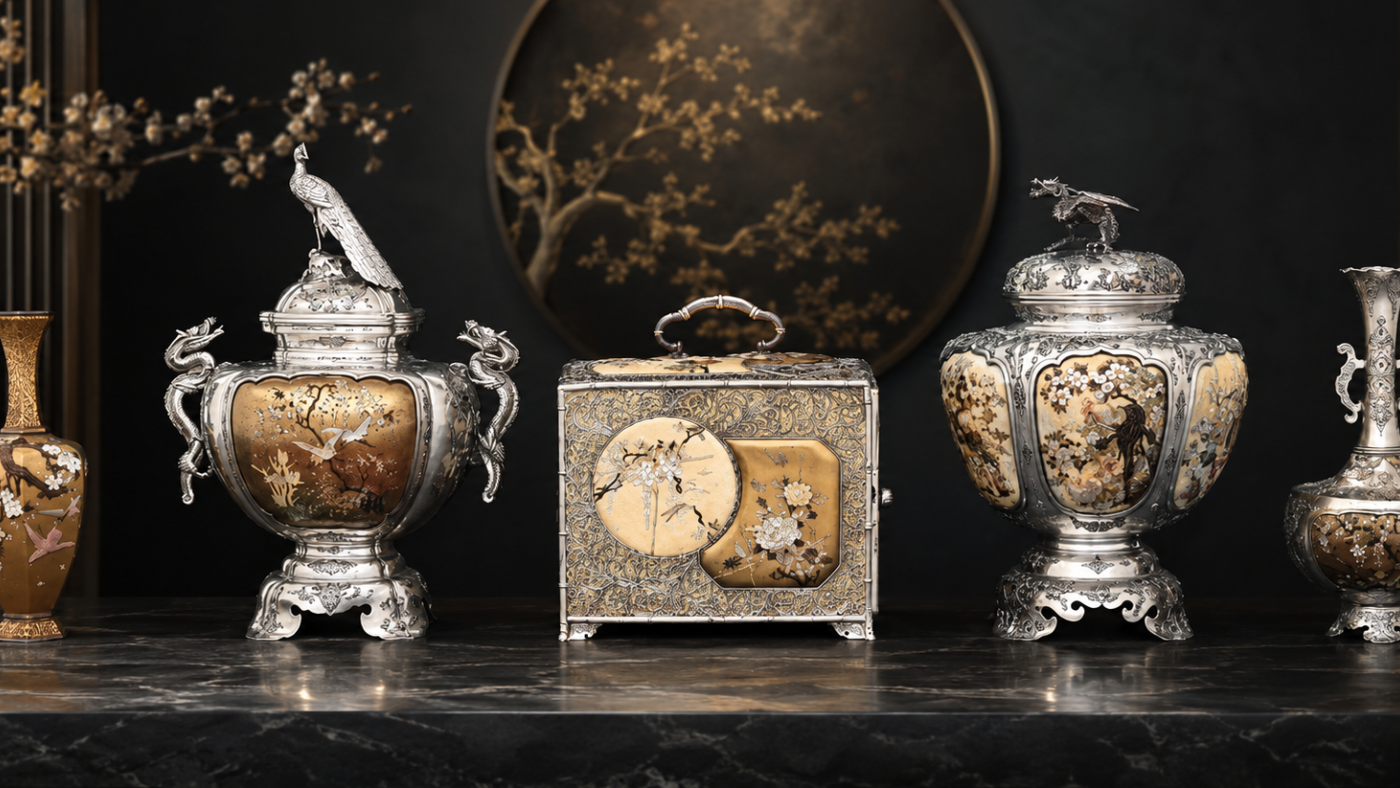
From intricately carved mother-of-pearl blossoms to lifelike birds perched atop silver masterpieces, Shibayama represents one of the highest achievements of Japanese decorative art. This July, Alderfer Auction is proud to present an exceptional group of Shibayama works in our July Collectors Auction, offering collectors a rare opportunity to acquire museum-quality examples of this celebrated Meiji tradition.
A Masterpiece in Every Detail
Few decorative arts reward close examination quite like Shibayama. At first glance, these Meiji-period masterpieces dazzle with their rich colors and intricate ornamentation. Look closer, however, and an extraordinary world begins to emerge—birds with individually carved feathers, blossoms fashioned from mother-of-pearl, coral, ivory, and shell, and landscapes painstakingly assembled one tiny piece at a time. re than decorative objects, they are triumphs of artistic collaboration and craftsmanship that continue to captivate collectors over a century after they were created. This July, Alderfer Auction is pleased to offer an exceptional collection of Shibayama works in our July Collectors Auction, giving collectors the opportunity to experience firsthand one of Japan's most remarkable artistic traditions.
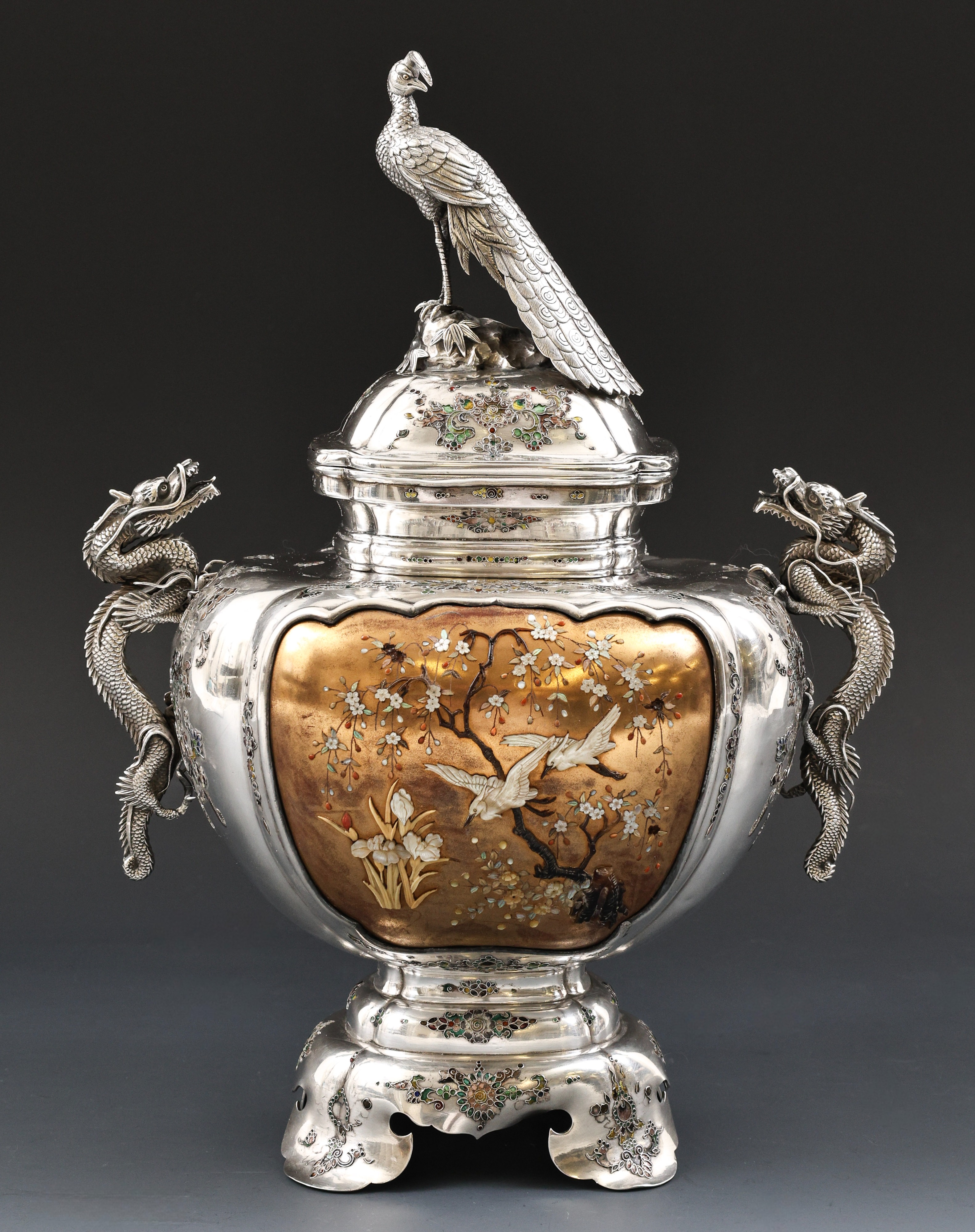
One of the most impressive works in the sale is a monumental silver covered urn signed Yoshihide, distinguished by its dramatic peacock finial, dragon-form handles, and exquisitely inlaid panels depicting cranes among flowering branches. It is a commanding example of the elaborate silverwork and naturalistic decoration that helped establish Meiji export art on the world stage.
What is Shibayama?
Shibayama refers to a decorative technique that flourished during Japan's Meiji period (1868–1912), a transformative era when Japan reopened to international trade after centuries of relative isolation. Named after the Shibayama family of craftsmen, the style became synonymous with luxurious objects that combined multiple artistic disciplines into a single work. Unlike painted decoration or engraved metalwork, Shibayama artists meticulously inlaid carved pieces of ivory, mother-of-pearl, coral, shell, horn, bone, and precious metals into lacquer, silver, bronze, porcelain, and wood. The result was a richly textured surface where flowers appeared to bloom, birds seemed ready to take flight, and every composition possessed remarkable depth and realism. Each finished object became far more than a decorative vessel—it became a miniature sculpture.
An Art Form Born for the World Stage
The Meiji era marked a dramatic turning point in Japanese history. As the nation embraced modernization and opened its doors to the West, artists and craftsmen found new audiences eager to collect the finest examples of Japanese art and design. Shibayama quickly became one of Japan's most admired luxury exports. These extraordinary works appeared at World's Fairs and international exhibitions, astonishing visitors with a level of craftsmanship rarely seen elsewhere. Wealthy collectors throughout Europe and America eagerly acquired them, and many eventually found their way into museums and distinguished private collections. Today, Shibayama remains one of the defining artistic achievements of the Meiji period, prized for both its technical brilliance and historical significance.
A Marriage of Artistic Disciplines
Perhaps the most fascinating aspect of Shibayama is that no single artisan created these masterpieces alone. An exceptional Shibayama object often required the combined talents of silversmiths, lacquer artists, enamellists, ivory carvers, engravers, and inlay specialists. Each craftsman contributed a particular skill before the object reached completion. This collaborative process resulted in works unlike anything else produced during the period. Brilliant enamels enhanced chased silver. Rich lacquer surfaces provided dramatic contrast for delicately carved shell blossoms. Mother-of-pearl birds appeared to float among flowering branches assembled piece by painstaking piece. The countless hours invested in every object are almost impossible to imagine today, making each surviving example a remarkable testament to human artistry.
Nature as the Artist's Inspiration
The natural world is at the heart of Shibayama design. Rather than relying on geometric ornament or repetitive patterns, artists looked to changing seasons, flowering gardens, and native wildlife for inspiration. Cherry blossoms symbolize renewal and the fleeting beauty of life. Cranes represent longevity and good fortune. Dragons evoke strength and protection, while peacocks embody beauty, dignity, and prosperity. These motifs were never merely decorative—they reflected centuries of Japanese symbolism and cultural tradition. It is this combination of artistry and meaning that continues to reward careful study, allowing collectors to discover new details every time they revisit a piece.
Highlights from Our July Collectors Auction
This tradition of exceptional craftsmanship is beautifully represented in Alderfer Auction's upcoming July Collectors Auction, where an outstanding group of Shibayama works illustrates the remarkable diversity, artistry, and technical mastery of the form. Spanning silver, lacquer, and intricate mixed-media decoration, these pieces reflect the very qualities that have made Meiji-period Shibayama so admired by collectors around the world.
Ikkin Dragon-Finial Covered Vessel
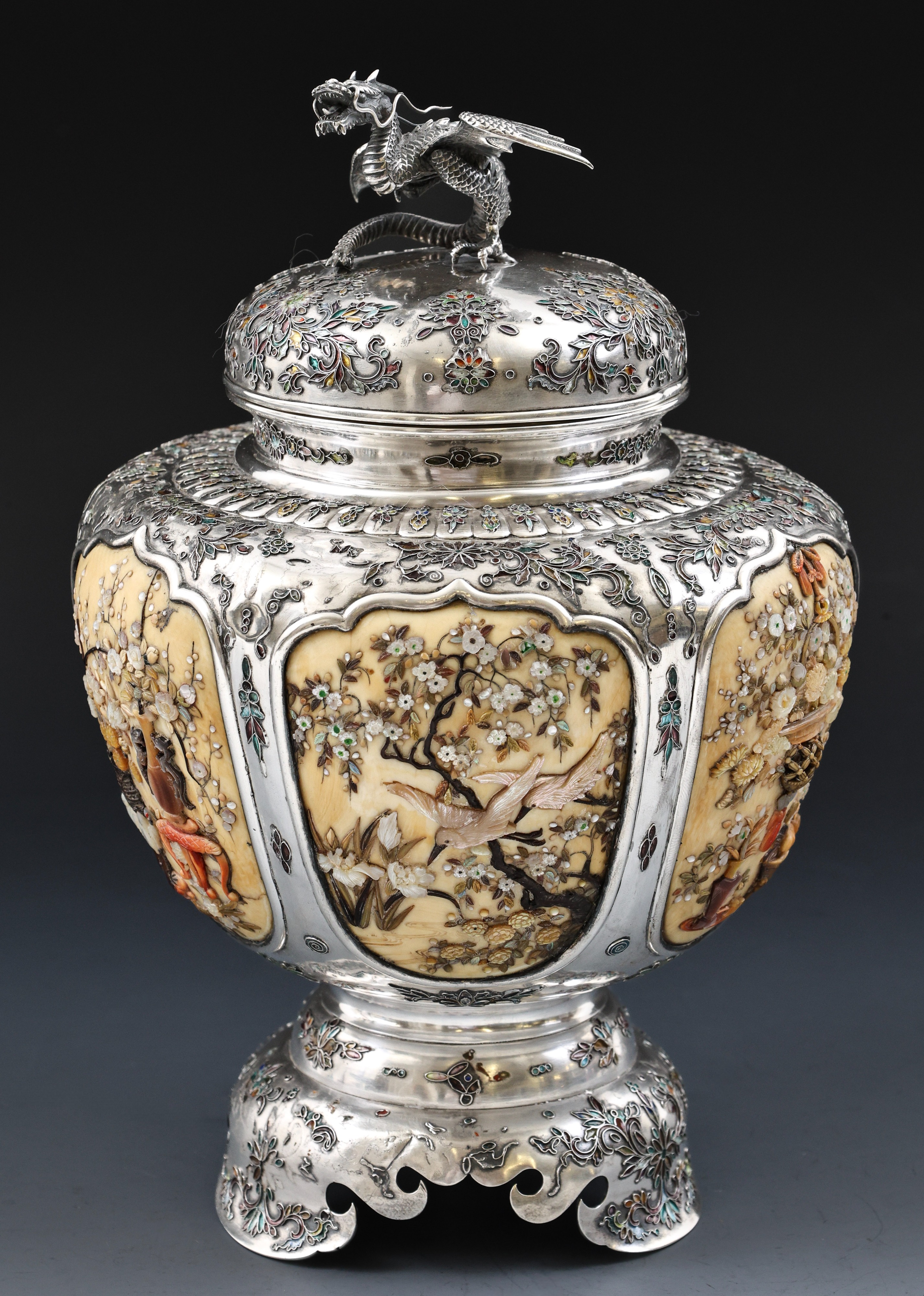
Another highlight is a monumental covered vessel by Ikkin, crowned with a finely sculpted dragon finial. Richly decorated with carved birds, blossoms, butterflies, and seasonal motifs, the piece demonstrates the remarkable collaboration between metalworkers, enamellists, and Shibayama artists that defined the finest workshops of the period.
Haruaki Silver Vase
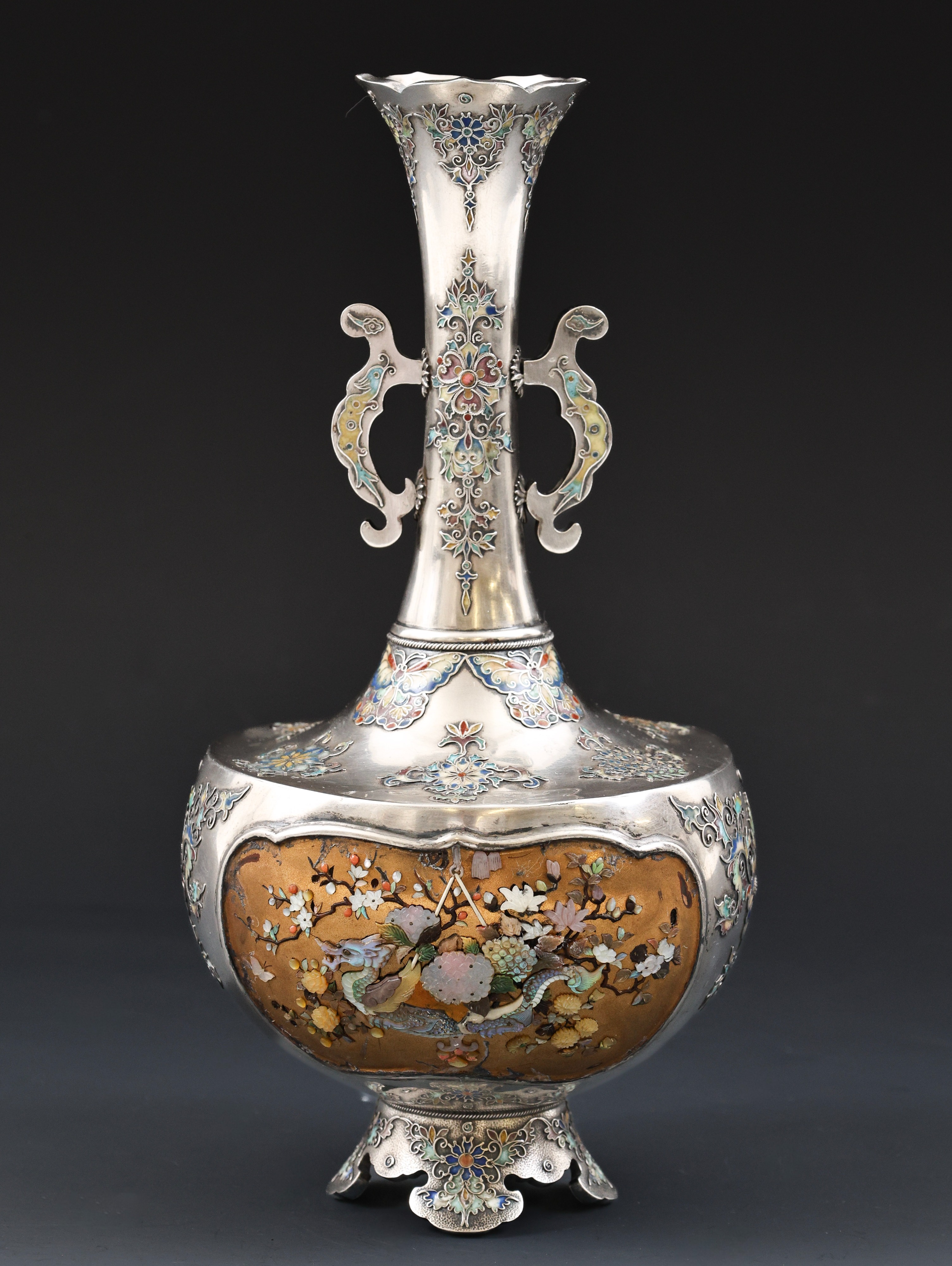
Collectors will also appreciate an elegant silver vase signed Haruaki, whose graceful proportions are enhanced by colorful enamel decoration and delicately inlaid floral panels. More restrained than the monumental presentation pieces, it nevertheless exemplifies the refined craftsmanship and artistic balance that make Shibayama so highly regarded.
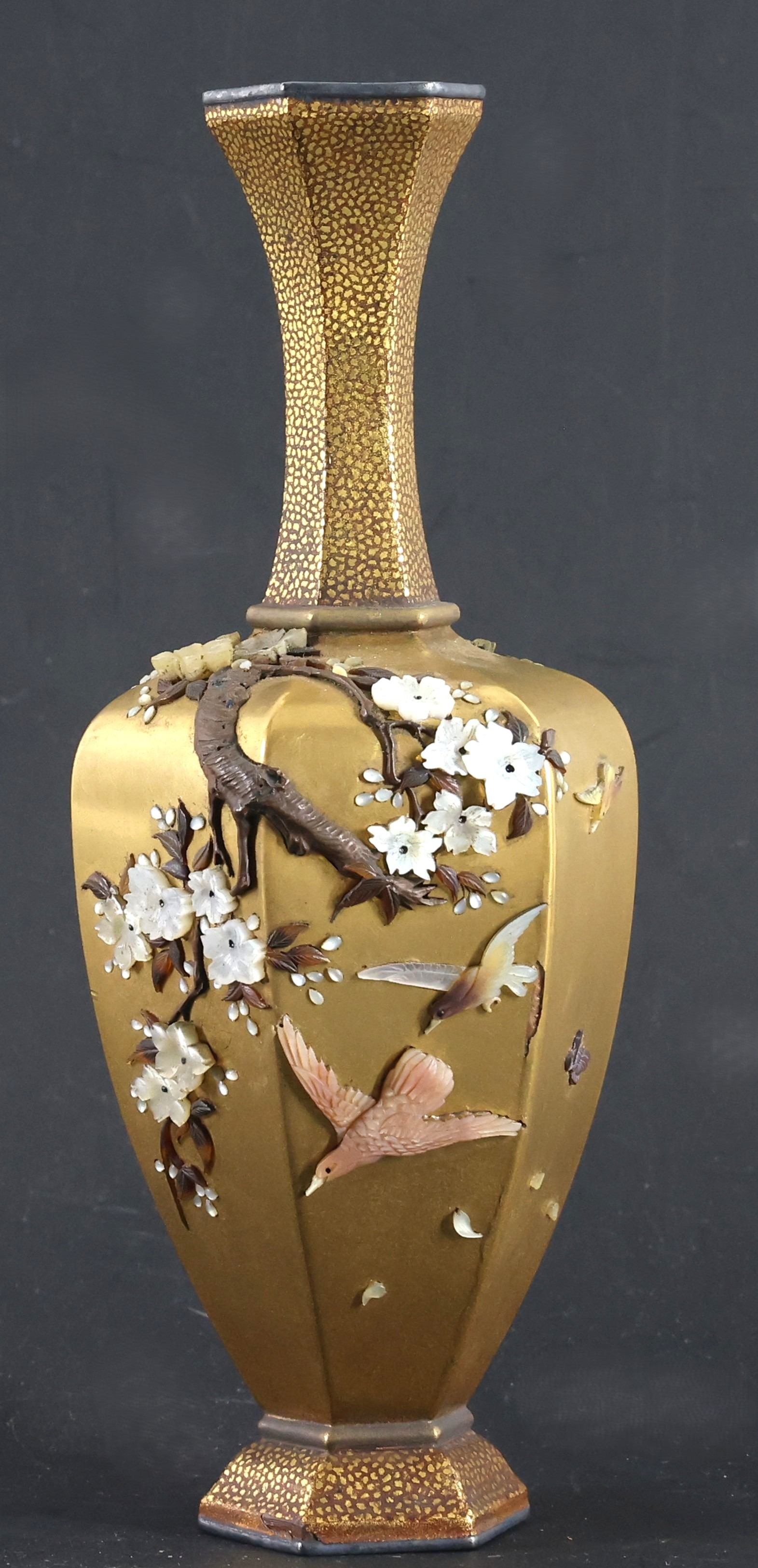
Ryumin Lacquer Vase
The collection also includes a beautifully executed lacquer vase by Ryumin, illustrating how Shibayama techniques extended beyond silver. Against a richly gilded lacquer ground, carved birds and flowering branches create an extraordinary sense of movement and depth, demonstrating the versatility and sophistication of the medium.
Completing the group is an exceptional Shibayama kodansu, its exterior enveloped in finely executed silver filigree surrounding delicately inlaid panels of flowering plants and birds. Although its signature tablet is no longer present, the kodansu retains French silver import marks, providing a fascinating reminder of the international demand for Japanese luxury goods during the late nineteenth century. More than a decorative cabinet, it reflects the extraordinary craftsmanship and global appeal that defined the finest Meiji export art.
Why Shibayama Continues to Captivate Collectors
More than a century after they were created, exceptional Shibayama works remain among the most coveted examples of Japanese decorative art. Their appeal extends beyond their extraordinary beauty. Each piece represents countless hours of hand craftsmanship, the collaboration of multiple master artisans, and a level of technical achievement that is difficult to replicate today.
Because many of these objects were originally created as luxury presentation pieces, they have survived in remarkable condition, allowing modern collectors to appreciate them much as they were admired during the Meiji era. As appreciation for Japanese export art continues to grow internationally, important Shibayama works have become increasingly sought after by museums and private collectors alike.
Discover the Collection This July
Whether you are an established collector of Japanese decorative arts or discovering Shibayama for the first time, the exceptional works featured in Alderfer Auction's July Collectors Auction offer a rare opportunity to experience one of Japan's most celebrated artistic traditions. From the commanding silver urn by Yoshihide to the dragon-crowned masterpiece by Ikkin, the refined silver vase by Haruaki, the elegant lacquer work of Ryumin, and the beautifully crafted Shibayama kodansu, each object tells a story of innovation, collaboration, and extraordinary craftsmanship. We invite you to explore the collection, study its remarkable artistry, and discover why Shibayama continues to fascinate collectors, curators, and art lovers around the world more than a century after these masterpieces were created.
Collectors Auction - More Information about our upcoming auction!